Context and Framing
Series on women in leadership, ministry, and the church, prompted by 8 years of personal study
Disclaimers upfront:
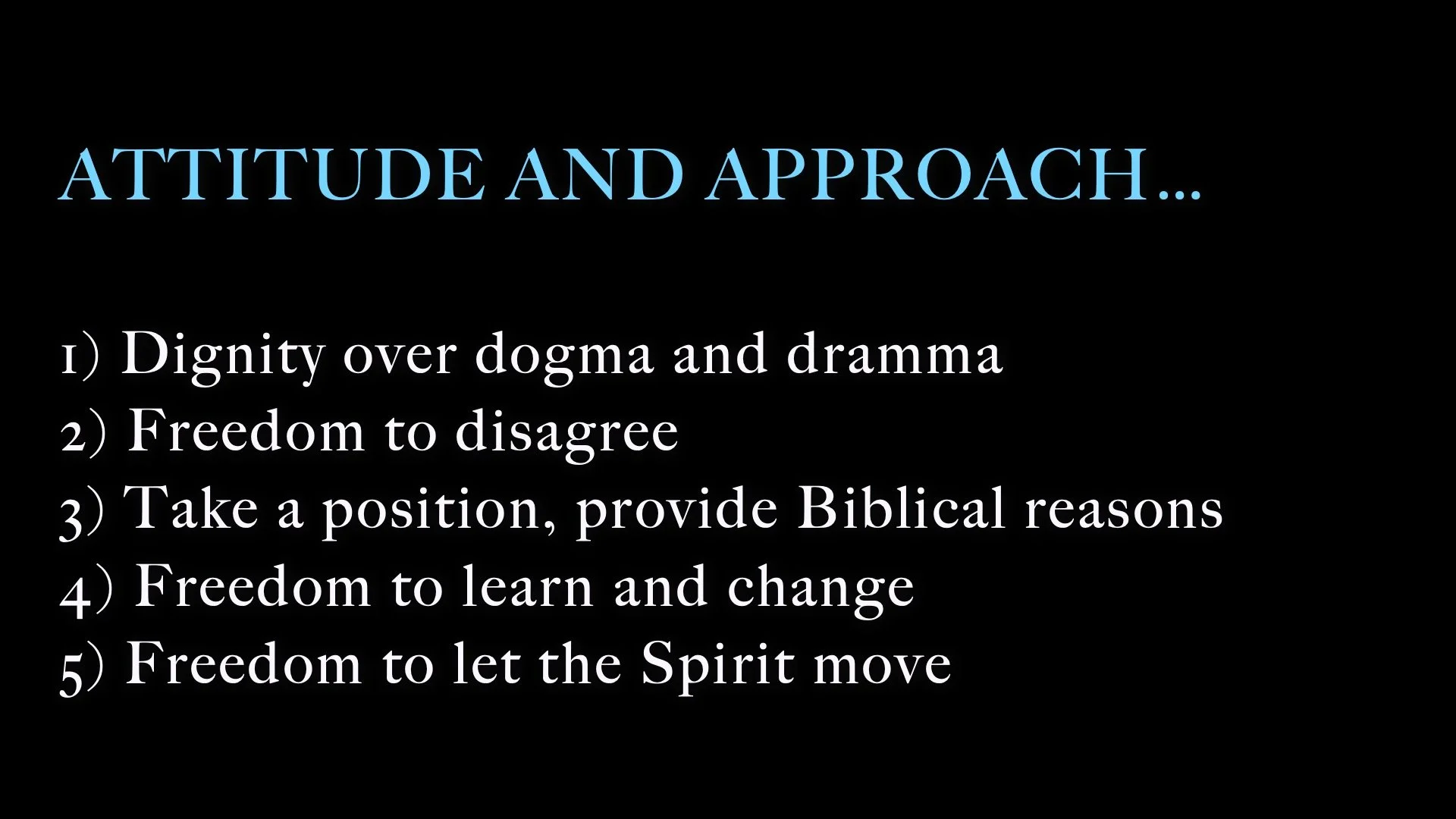
Not a salvation issue; dignity over dogma
Freedom to disagree, but every position needs a biblical basis
Pastor is still learning: “Study like a scholar. Listen like a prophet. Act like an apostle.”
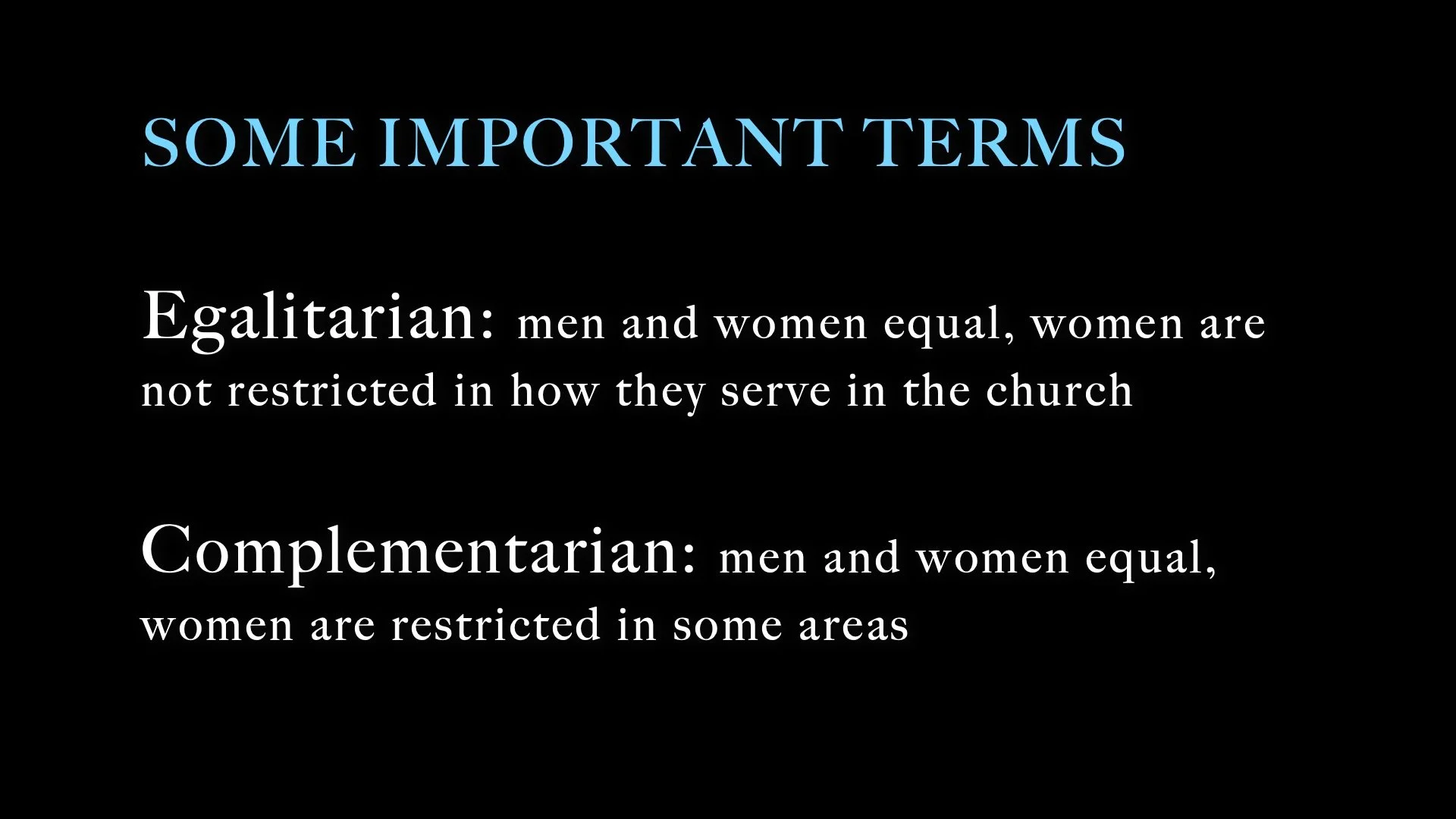
Two main camps defined:
Egalitarian: no restrictions on women in church
Complementarian: men and women have different roles, with more leadership reserved for men
Biblical Foundation: Leadership as Service
Leadership in the kingdom is service, not authority or status
Key texts:
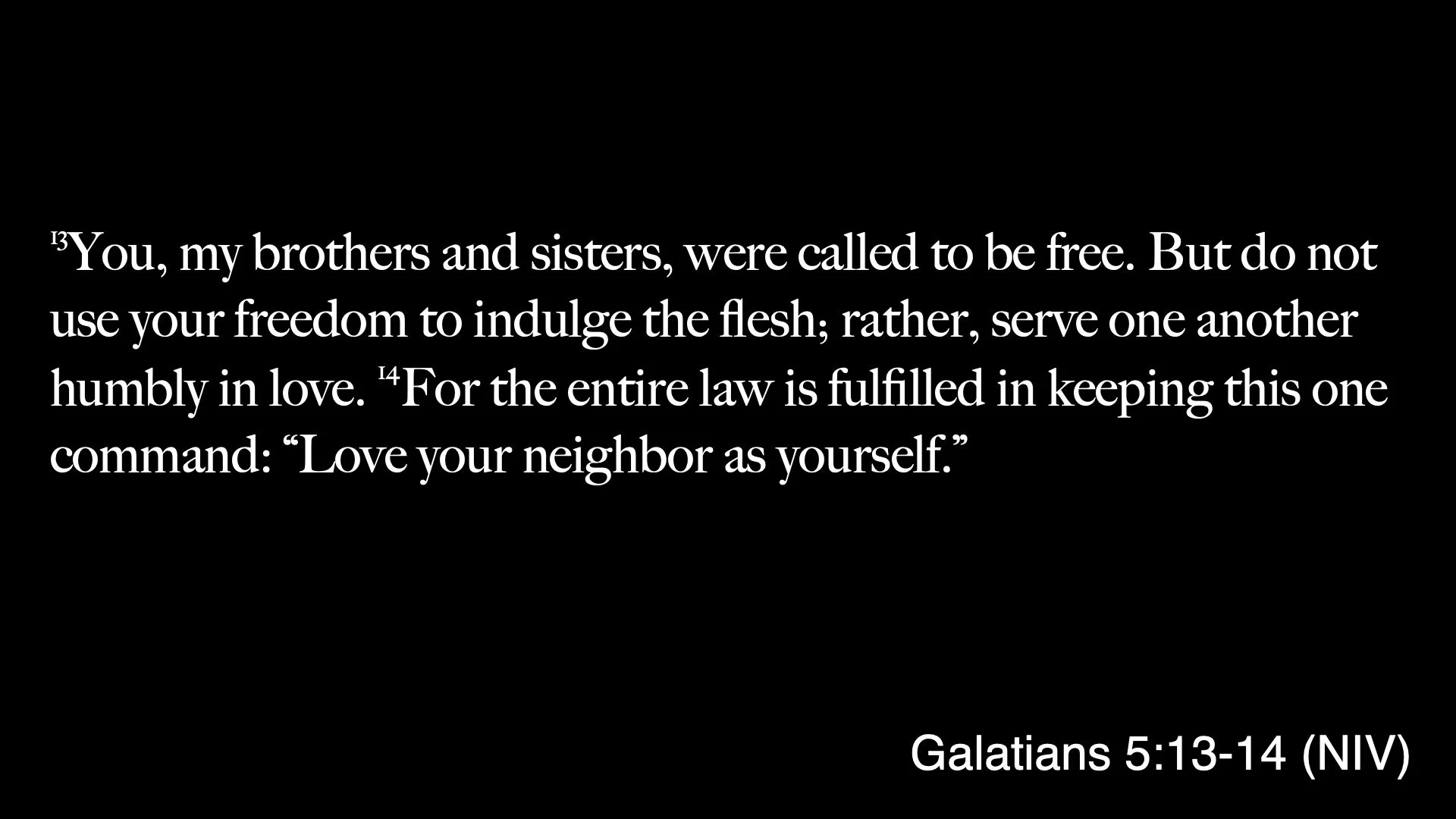
Galatians 5:13-14: freedom is not license to abuse authority; love your neighbor
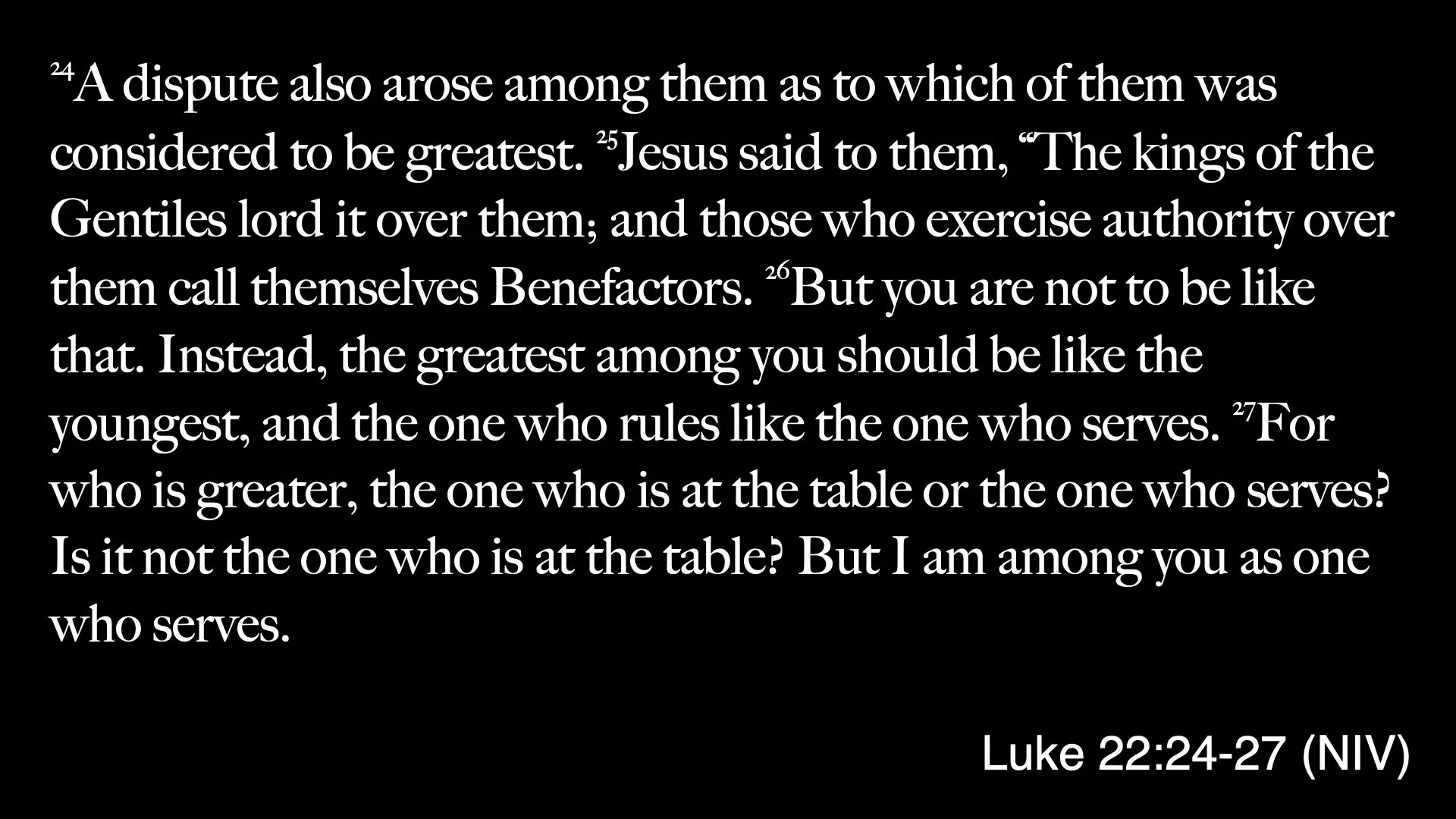
Luke 22:24-27: Jesus reframes greatness as serving, not ruling
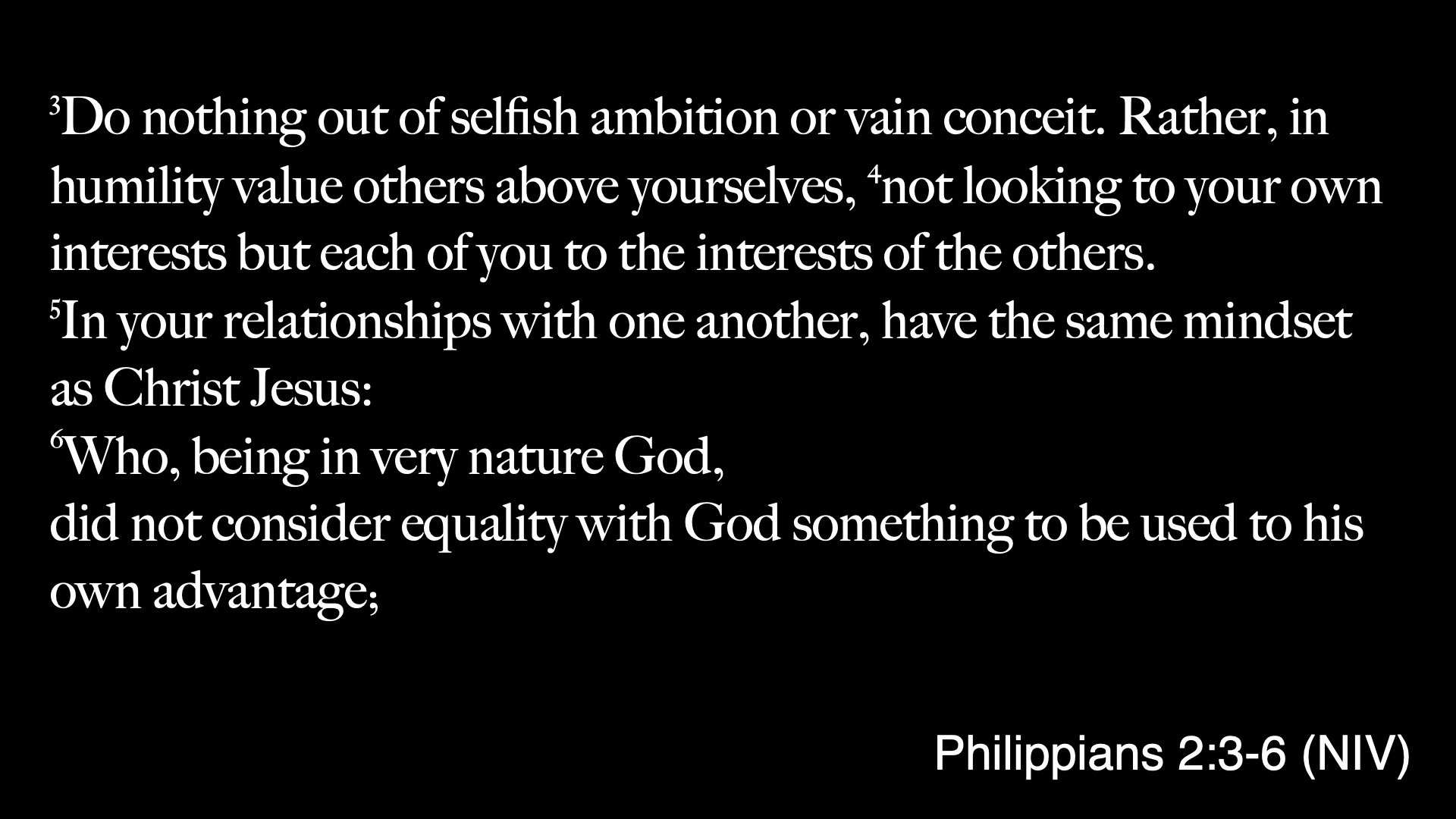
Philippians 2: leadership is not to be grasped or taken, but stewarded if received
Esther as the model: didn’t seek her assignment, but received and stewarded it
Core principle: “By the time you’re ready to lead, you no longer desire it”
Exegesis of 1 Corinthians 14
Context: Paul opens with full participation for all (v. 26): psalm, teaching, revelation, tongue, interpretation
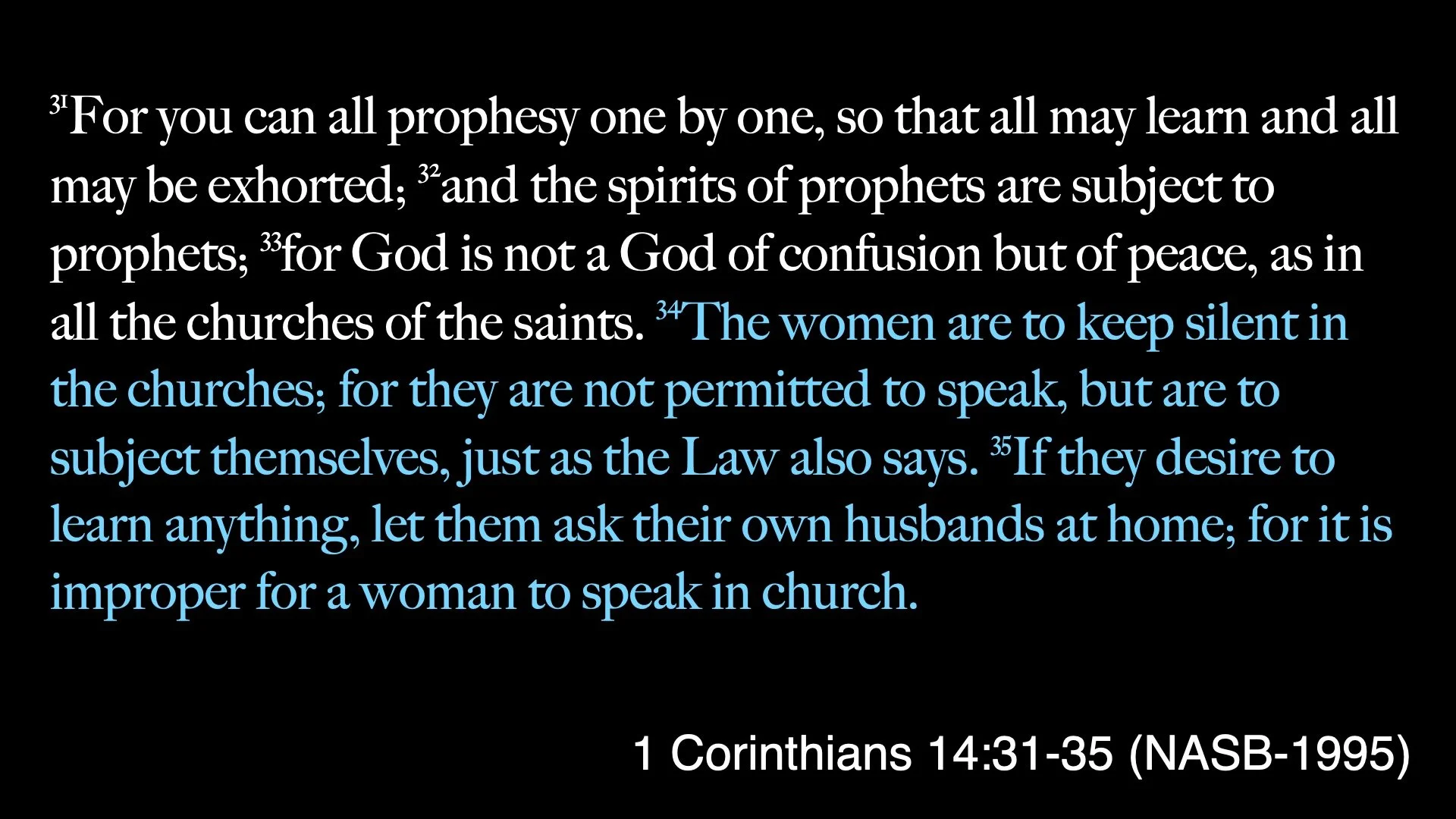
v. 31: “you can all prophesy” — no gender restriction stated
The difficult passage (vv. 34-35, in blue): “women are to keep silent”
Four major problems scholars identify:
Direct contradiction with v. 31 (all can prophesy)
Paul never specifies what women are to subject themselves to
“As the law says” — the law never once commands women to be silent in worship
The Greek word immediately following (disjunctive particle) means “What? No way” — Paul appears to reject the statement
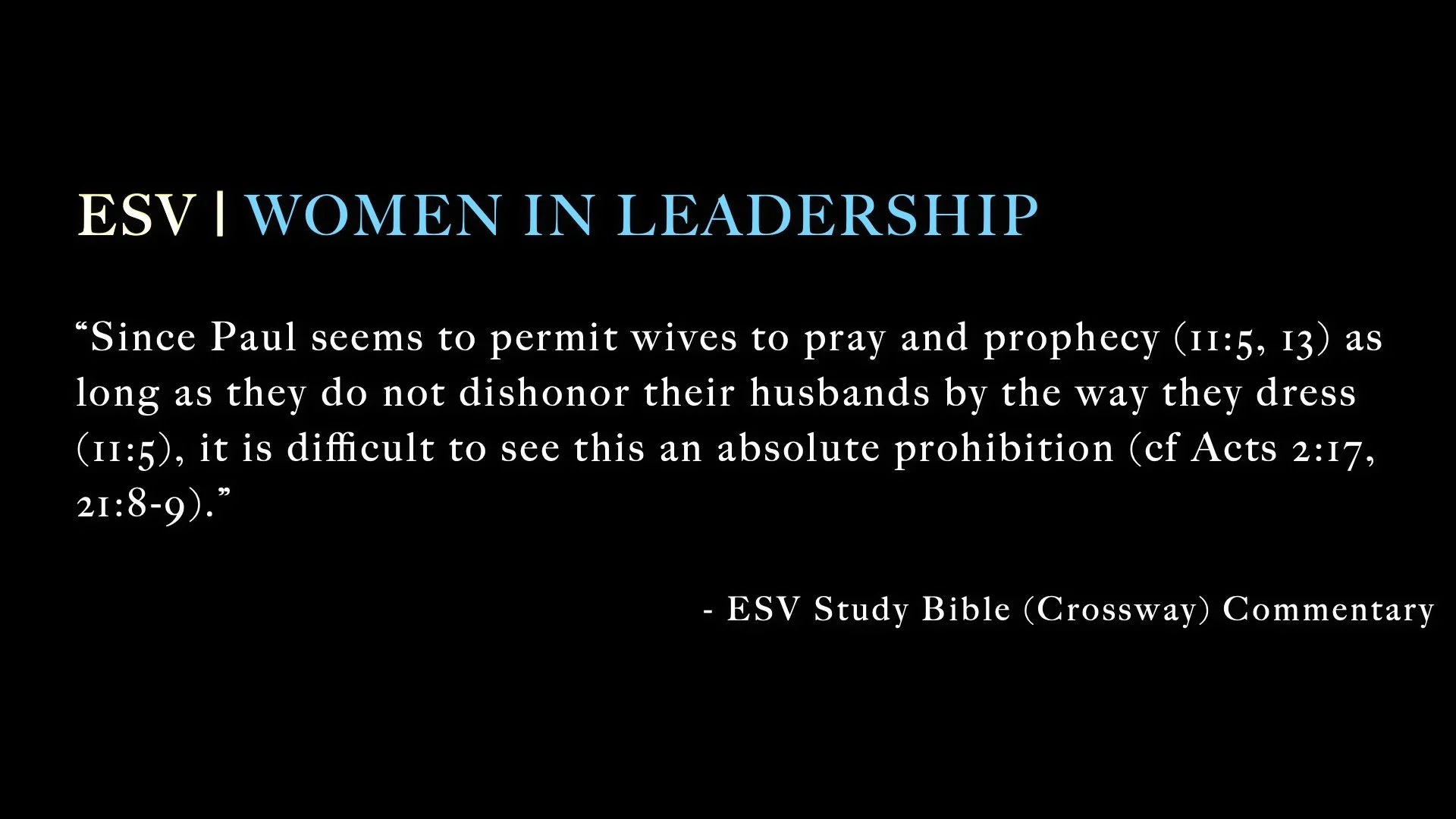
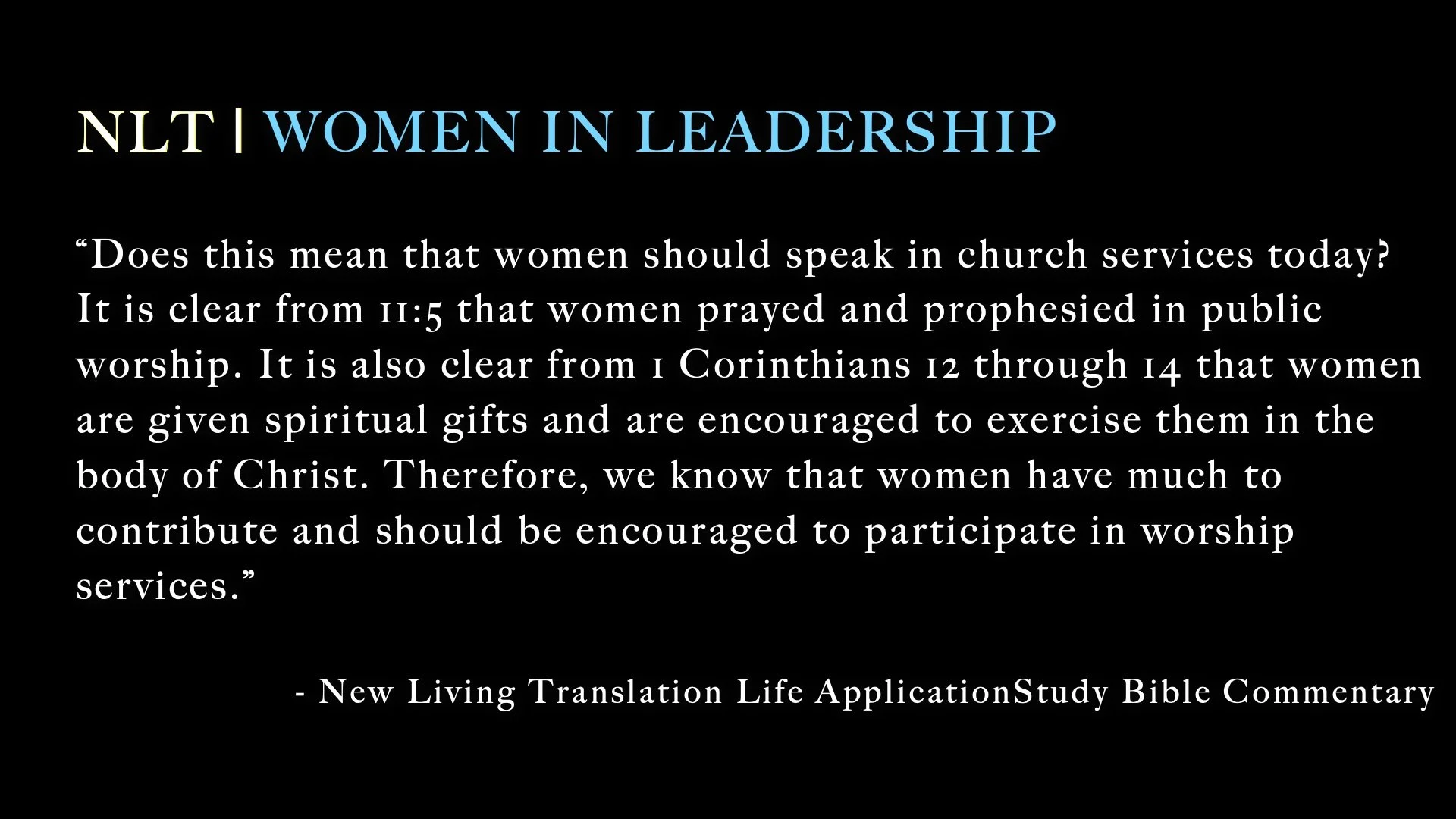
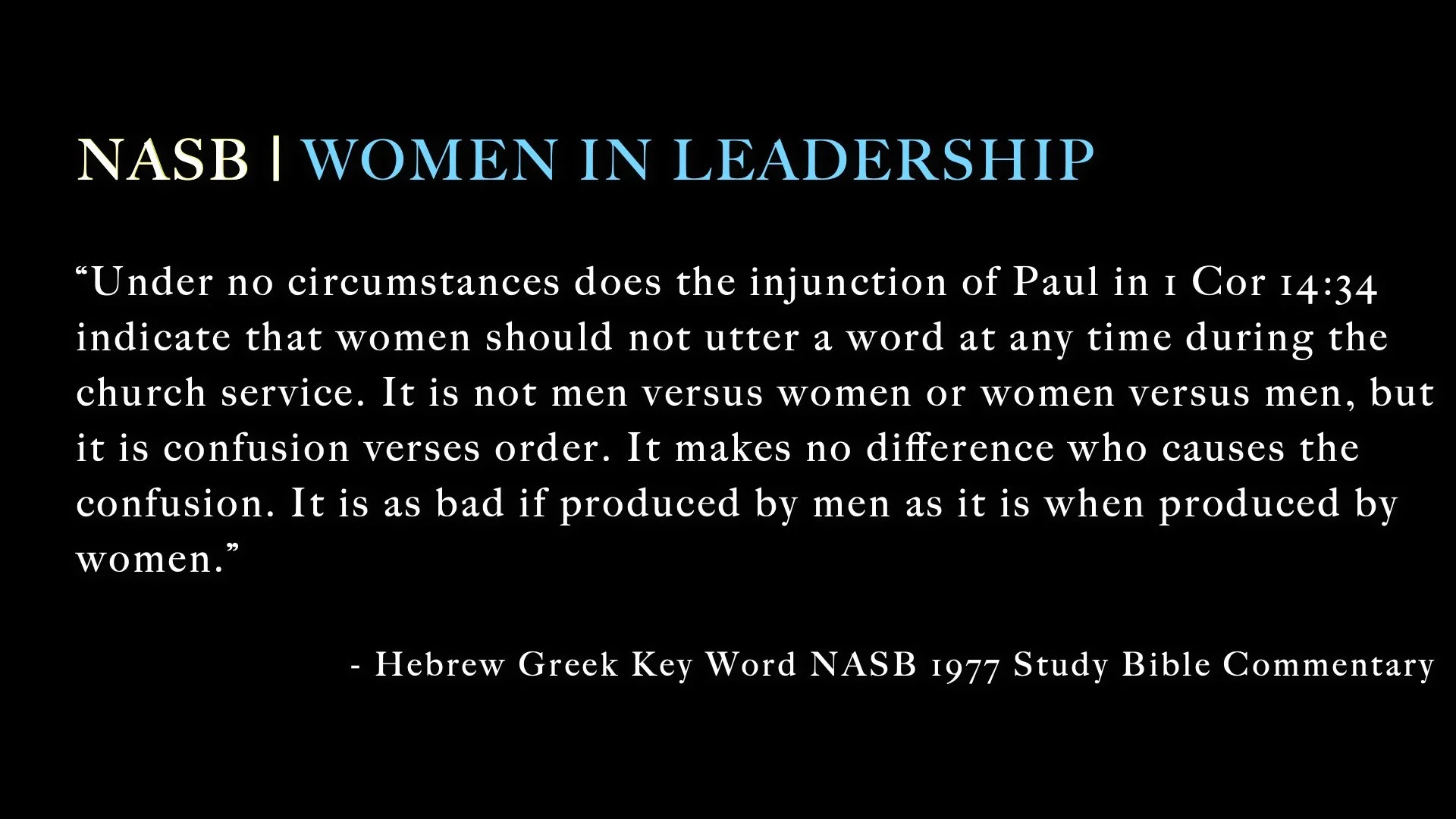
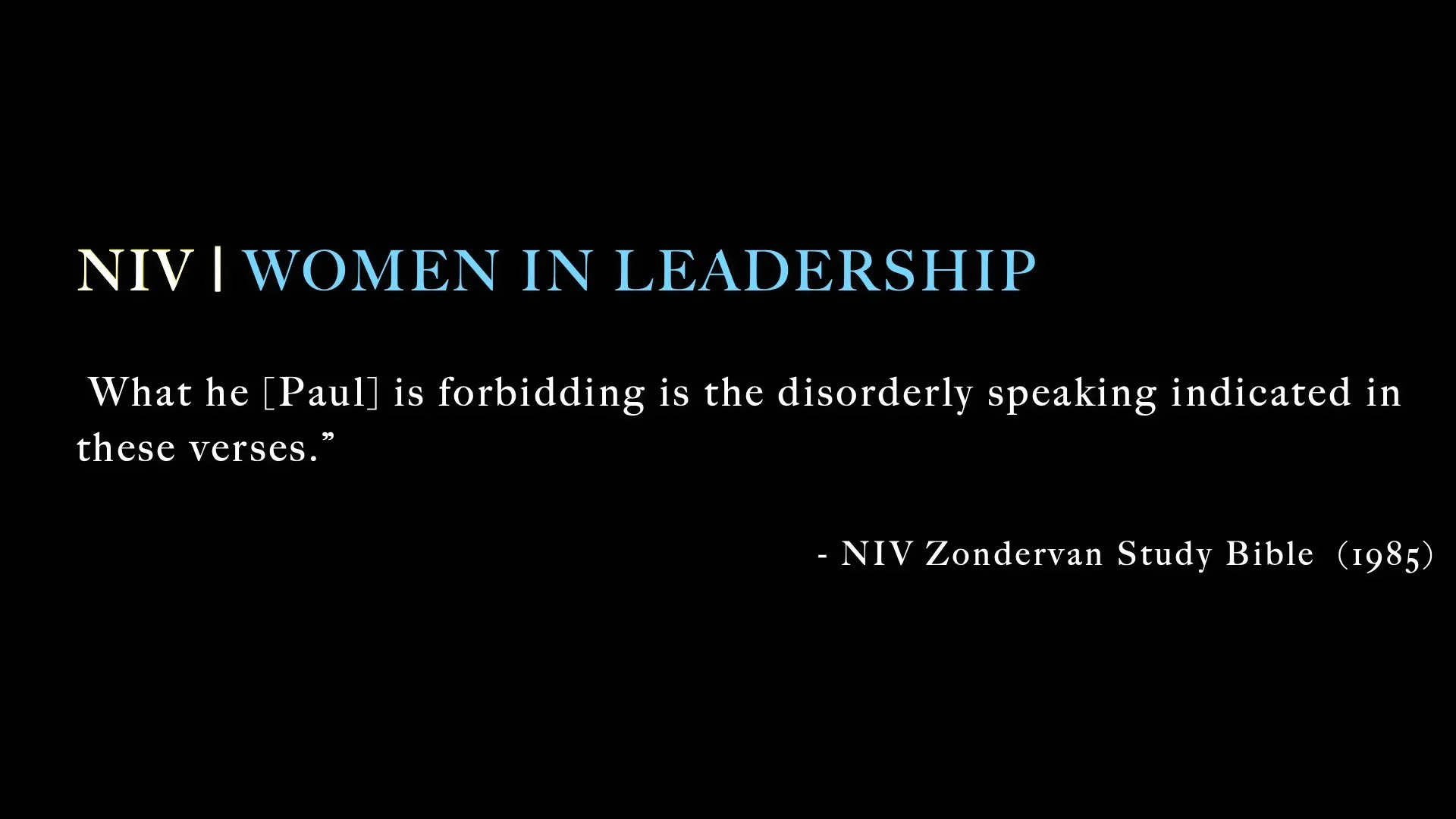
Scholarly consensus across ESV, NLT, NASB, NIV study Bibles: this passage is about order vs. chaos, not gender restriction
NASB: “It is not men vs. women, but confusion vs. order”
Most likely scenario: women were calling across the room to ask questions; Paul says save it for home
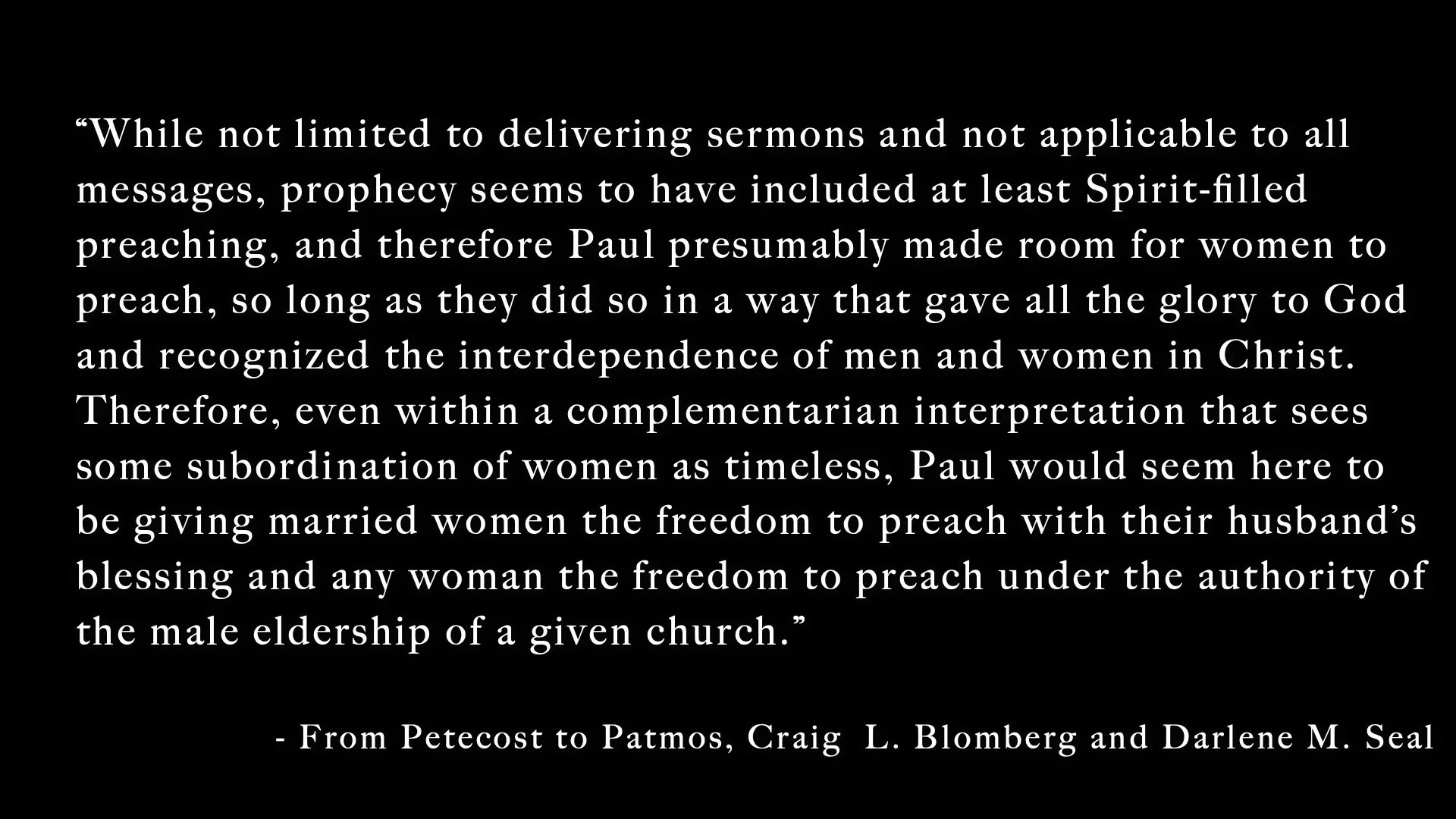
Most restrictive complementarian reading (seminary textbook): women may preach with husband’s blessing or under male church leadership authority
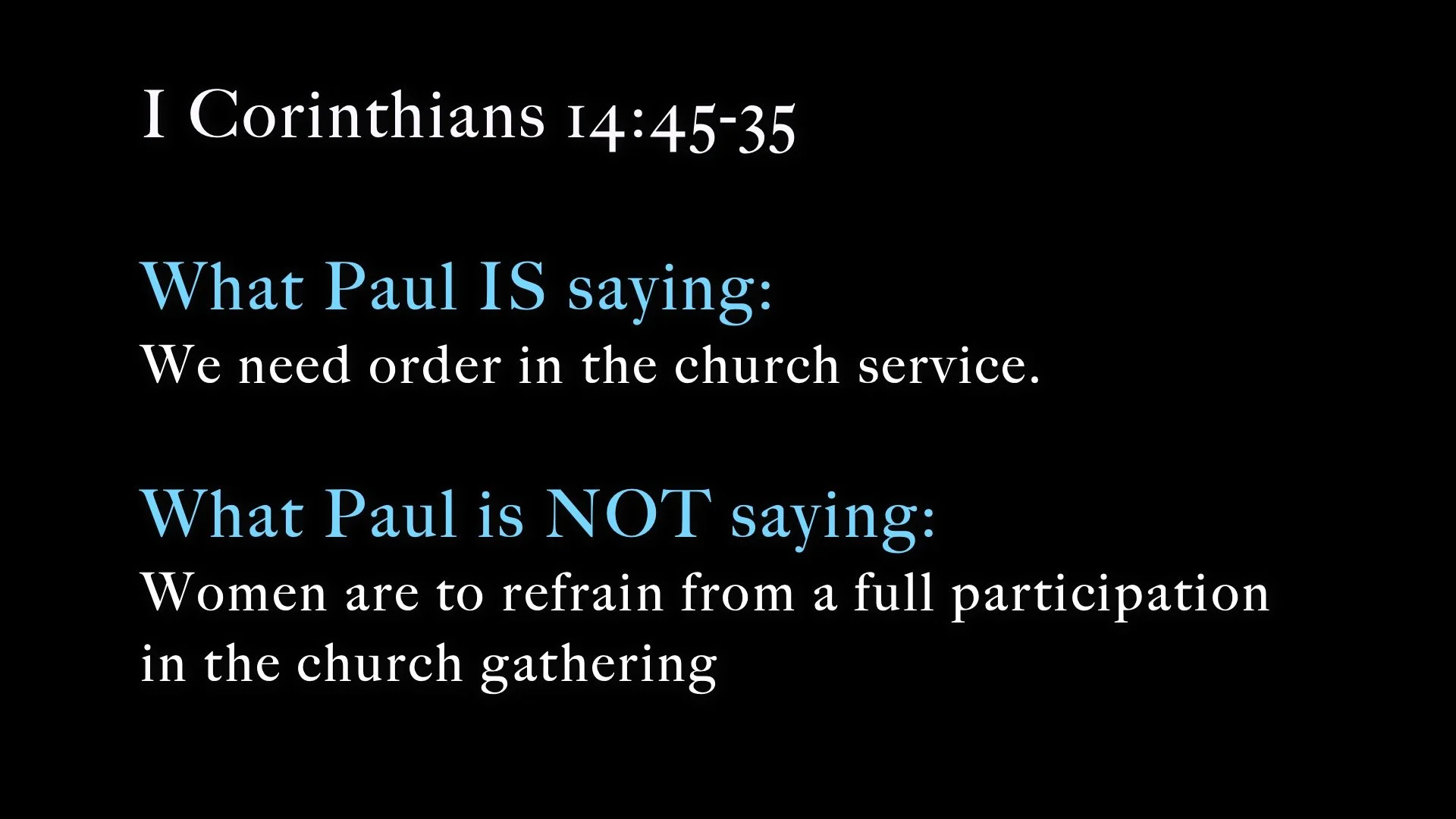
Conclusion: “What Paul is saying: we need order. What Paul is not saying: women should refrain from full participation.”
Jesus’s Tone and Closing Response
Luke 4: Jesus’s first recorded sermon quotes Isaiah 61 — jubilee, release, freedom for the captive and downtrodden
First example Jesus gives of who he came to free: a woman (the widow of Zarephath)
Second: Naaman, a Gentile enemy commander
Result: the congregation tried to throw him off a cliff
Series framing: not about women taking something or displacing men
“It’s about women taking the place in their spiritual destiny without being impeded by goofy theology”
Closing act of worship:
Men sang over the congregation while women stood to receive prayer and blessing
Pastor broke off past experiences of being told to be silent, sit on the sidelines, or be lesser than
Released women to “run in their God-given destiny”
Next week: 1 Timothy 2:12