Women In Leadership (Part I)
Series Launch: Women in Leadership
New Testament series beginning, following 4+ years through the Old Testament
Series title: “Freedom and Authority: Women in Leadership and Gender Identity in the Church”
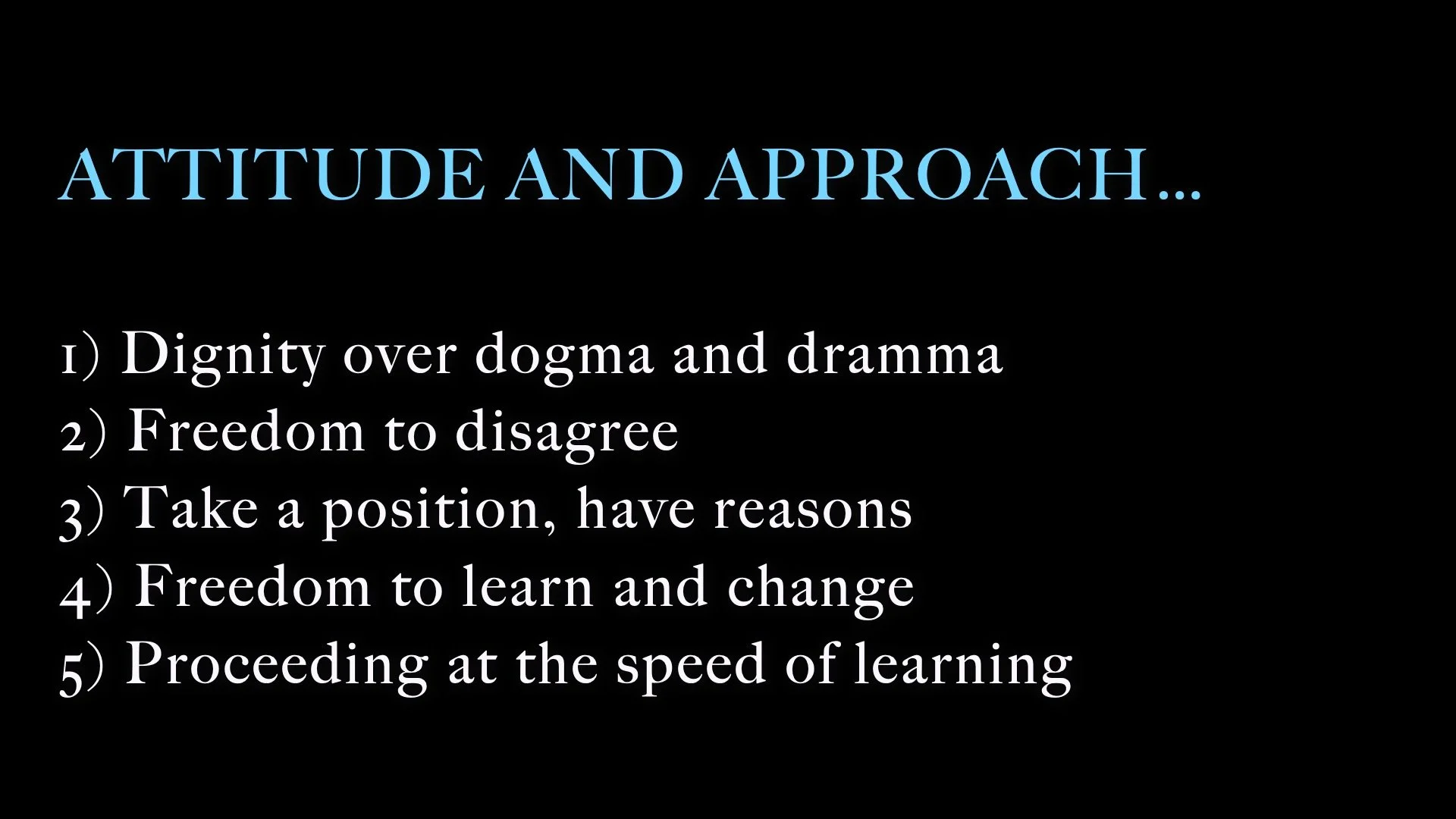
Framed as neither progressive/feminist nor politically conservative: goal is alignment with scripture
Driven by 8-year personal journey; Ken acknowledges he may still amend views
God’s big-picture reason: raising a “last days army” that needs men and women both on the battlefield
Erin’s Opening Reflection
Initially unenthusiastic when Ken proposed the series: most women are just trying to survive daily life, not seeking more responsibility
Story from Afghanistan: Afghan women who loved their burqas prompted reflection on how easy it is to stay “hidden”
Core challenge from the Lord: do you really believe Jesus is coming back? Live in full abandonment, not comfort or complacency
Framing: not about women taking anything, but about being willing to receive what the Holy Spirit wants to give
Prayed over women in the room; added a separate prayer for godly marriages for single women
Ken’s Theological Position
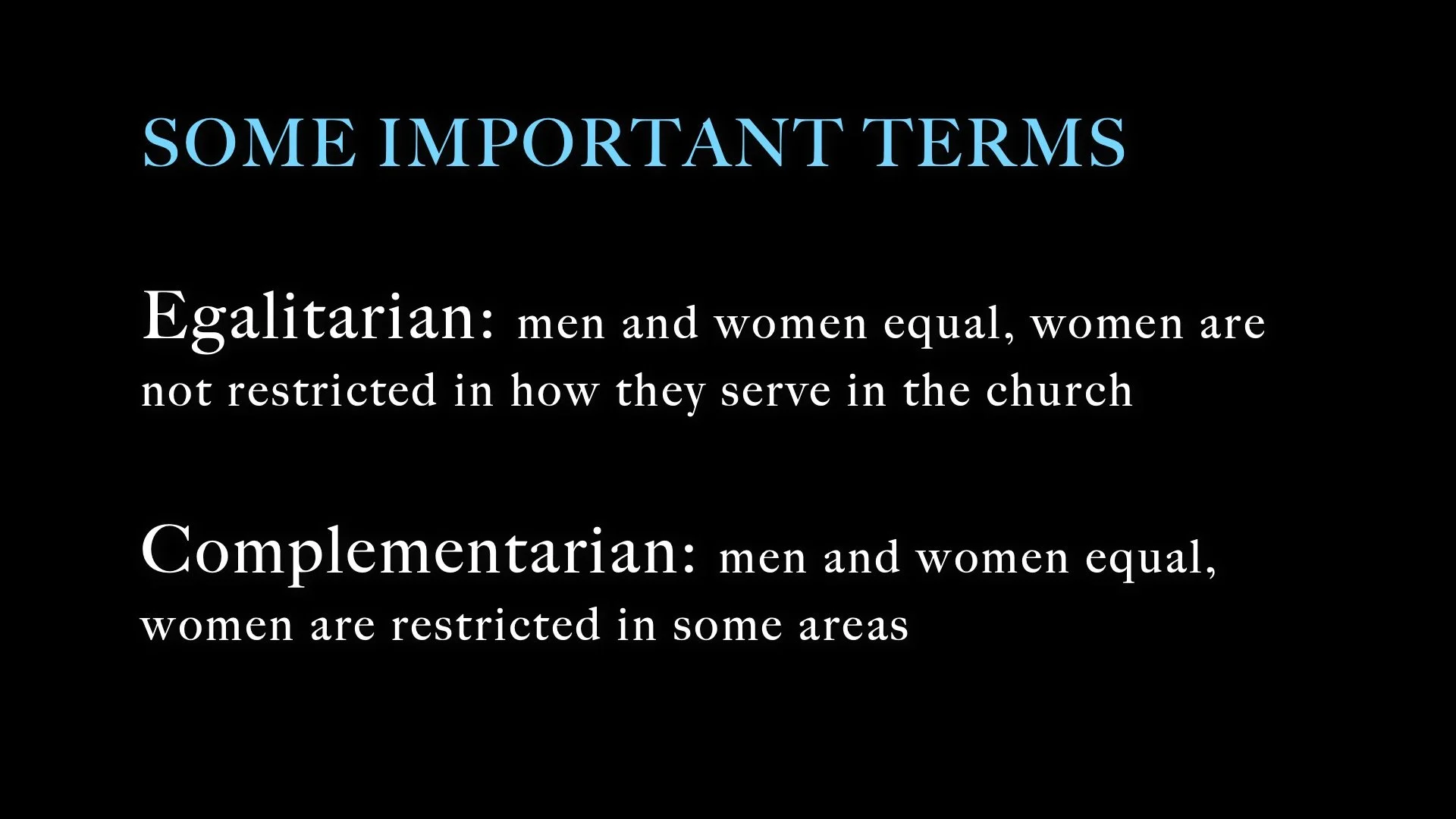
Two camps defined:
Egalitarian: women unrestricted in all church roles
Complementarian: women restricted in some areas
Ken’s landed position, drawn from Antioch movement’s position paper:
Women can demonstrate every spiritual gift and hold any leadership role: teacher, pastor, elder, international team leader
Church is best understood as a family, not corporation, so a male senior leader aligns with the family leadership structure found in Ephesians
Mentors and influences cited:
Ray Mayhew (80 years old): egalitarian, deep scriptural depth
Taylor Foster (M.Div.): “soft egalitarian,” freedom in all roles except possibly senior leader
Pastor in Omaha: recommended the book “Beyond Sex Roles”,
Book recommendations for the New Testament series: two volumes by Blomberg, “Jesus and the Gospels” and “From Pentecost to Patmos”
Historical Bias and Week 2 Preview
Greek and Roman foundations shaped deeply negative views of women:
Aristotle: women as “deformed male,” naturally inferior
Romans: compared unchecked women to wild animals
Rabbinic tradition: “burn the Torah before delivering it to a woman”
Church fathers (Tertullian, Aquinas, Calvin): women “defective,” “inferior in rank”
Declaration of Independence declared all men equal in 1776; women couldn’t vote until 1920 (144 years later)
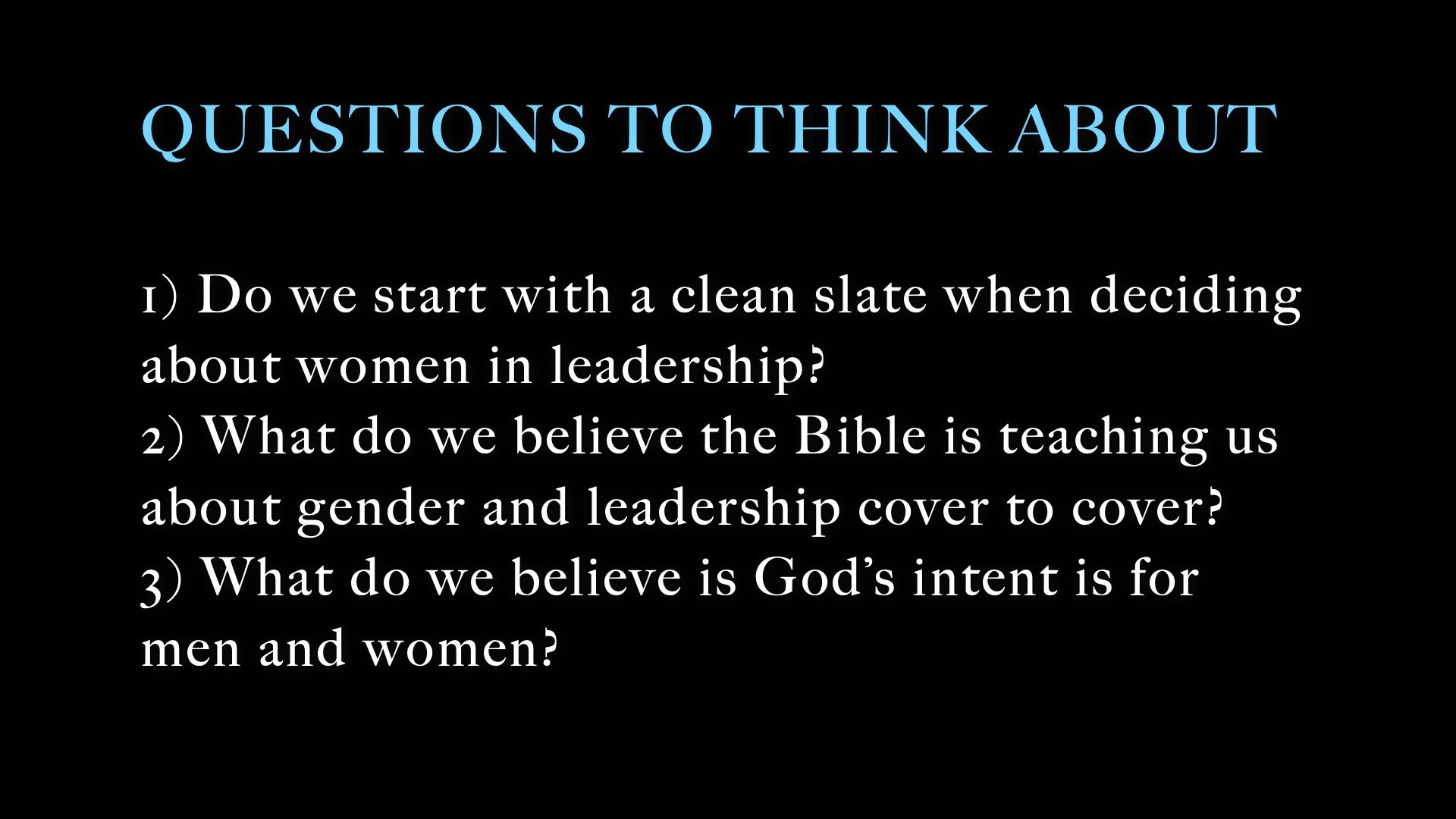
Key question posed for reflection: when interpreting scripture on this issue, are we starting from a clean slate, or from centuries of inherited bias?
Next week: Jesus’s early sermon and how he engaged women in that cultural context
Next Steps
Submit questions for the live Q&A series finale Email hello@tribeomaha.com with questions or topics not covered in the series.