Context and Setting
Series finale of the Old Testament walkthrough, launching a five-week series on women in leadership
Honored David and Pam: David leads Esther 8:6 prayer ministry, praying for national leaders every Saturday for 10+ years with 15–40 people
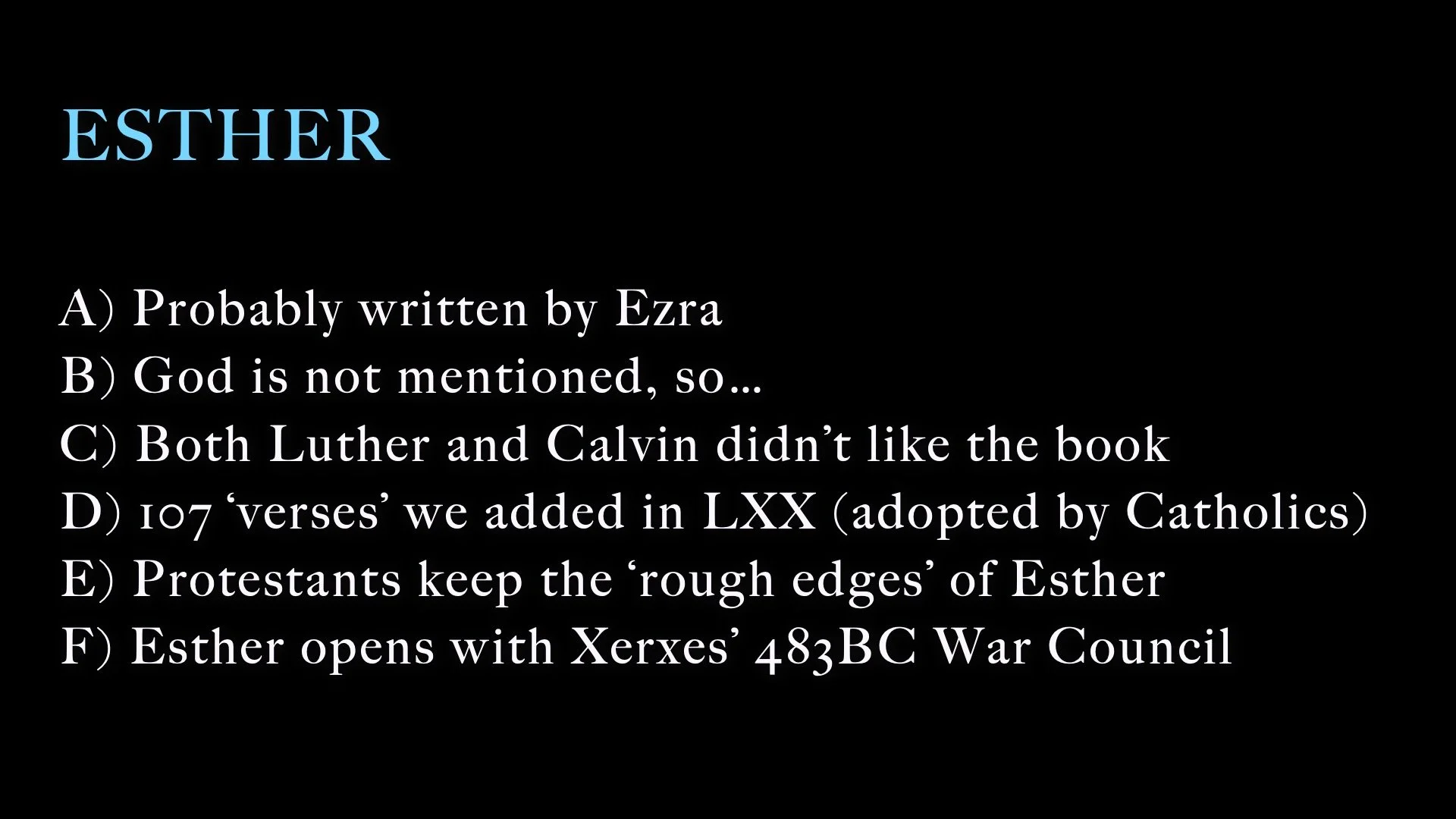
Book of Esther likely written by Ezra; chronologically fits between Ezra chapters 6 and 7
God’s name not explicitly in the text, but Yahweh acrostics are hidden throughout for Jewish readers
Luther and Calvin were skeptical; the Septuagint added 107 verses to compensate; Catholics adopted them, Protestants kept the rough edges
The Story of Esther: Key Beats
King Ahasuerus (Xerxes) holds a six-month war council in 483 BC, preparing to fight Greece
Queen Vashti refuses his humiliating public summons and is banished
Xerxes loses three major battles against Greece (including Thermopylae) and returns defeated and queenless
Kingdom-wide beauty contest launched to find a new queen
Mordecai, a Jewish exile and political advisor, enters his orphaned niece Esther
Esther hides her Jewish identity; wins the king’s favor and is crowned queen
Mordecai uncovers an assassination plot, reports it through Esther; the king’s life is saved but Mordecai goes unrewarded
Haman, a descendant of the Amalekite king Agag, is promoted above all other leaders
Demands universal bowing; Mordecai refuses on the basis of his Jewish identity
Haman plots genocide: casts lots (purim) for a year to pick the date, then gets the king to sign a law ordering the massacre of all Jews in 11 months
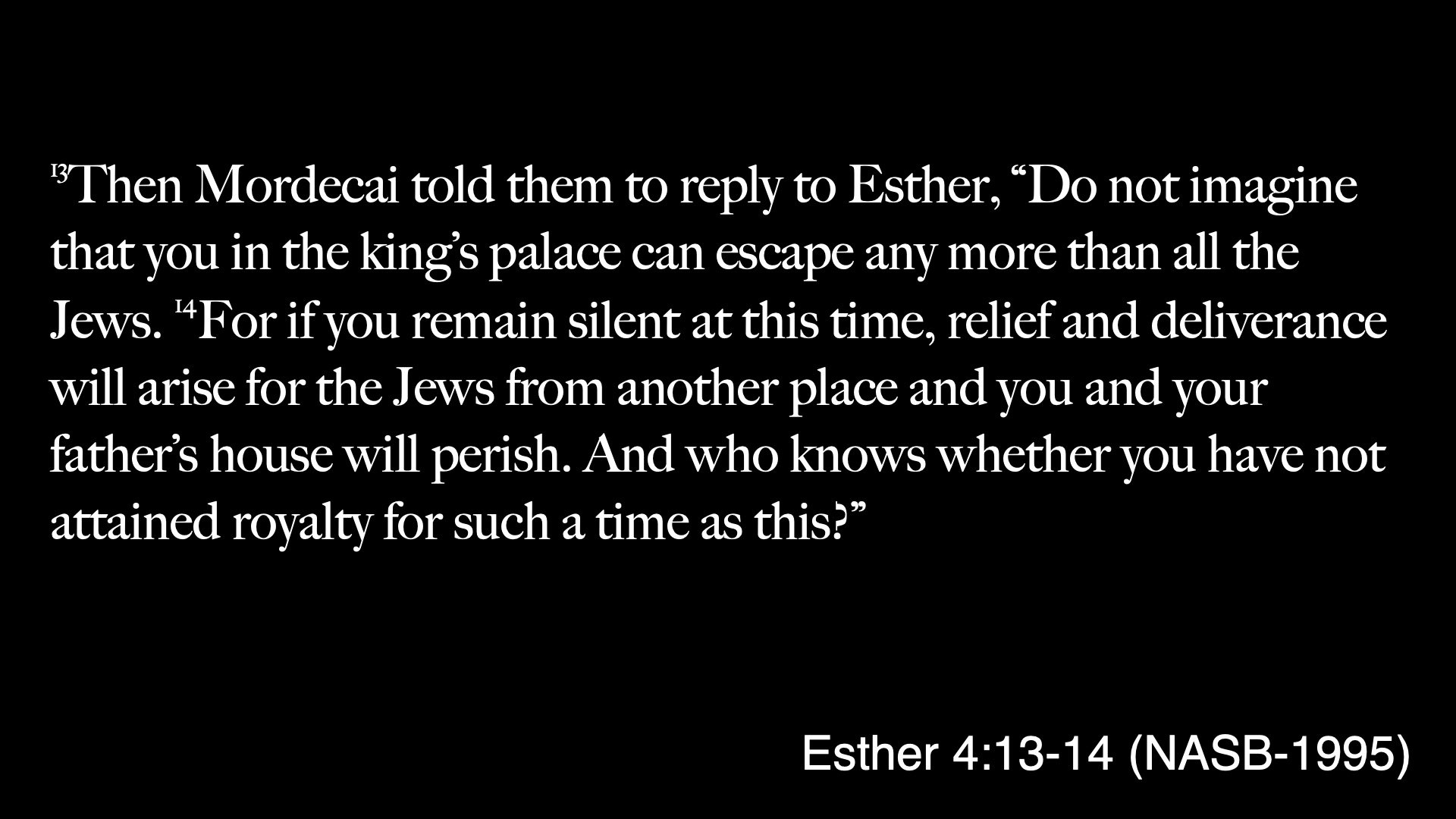
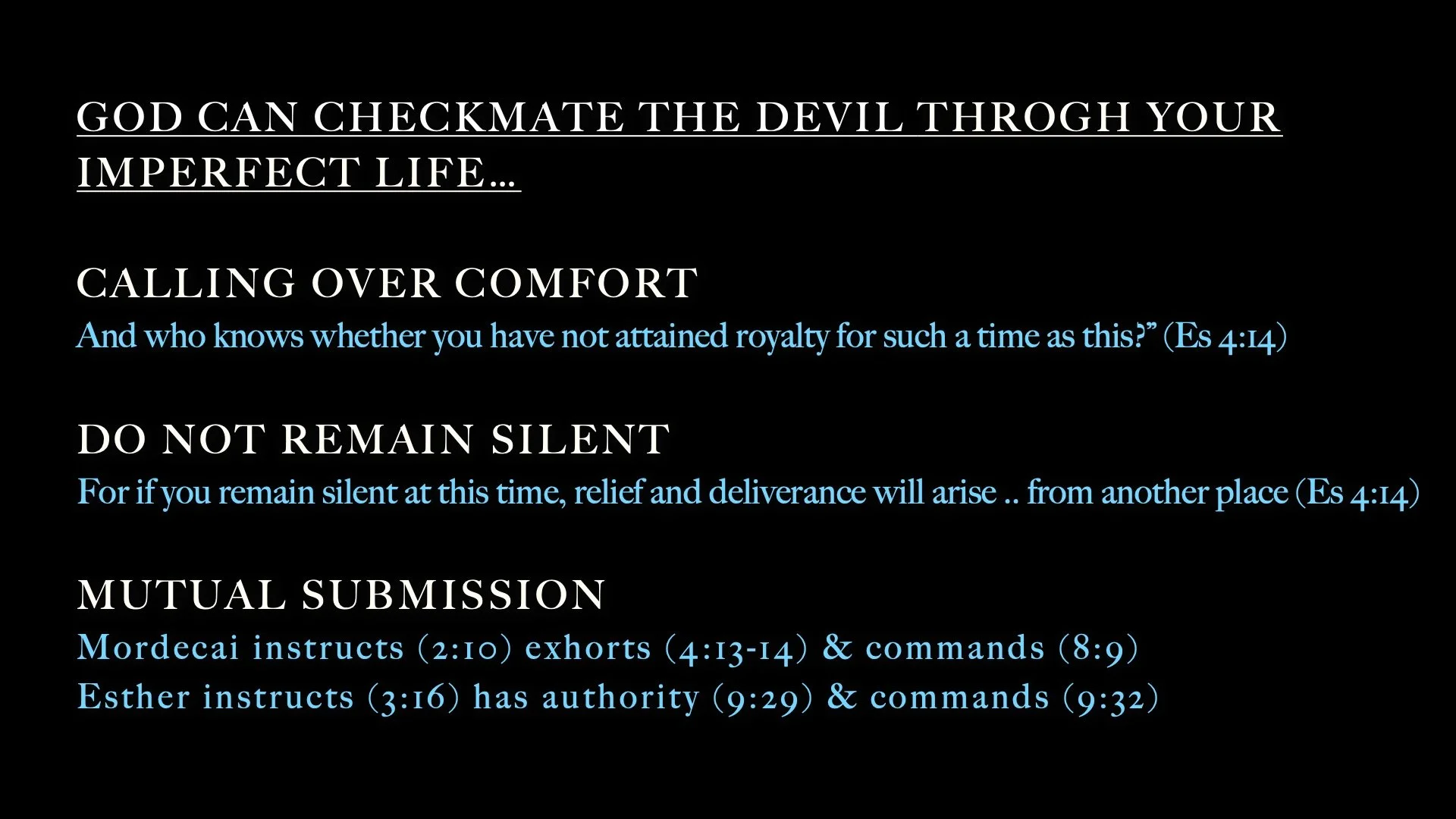
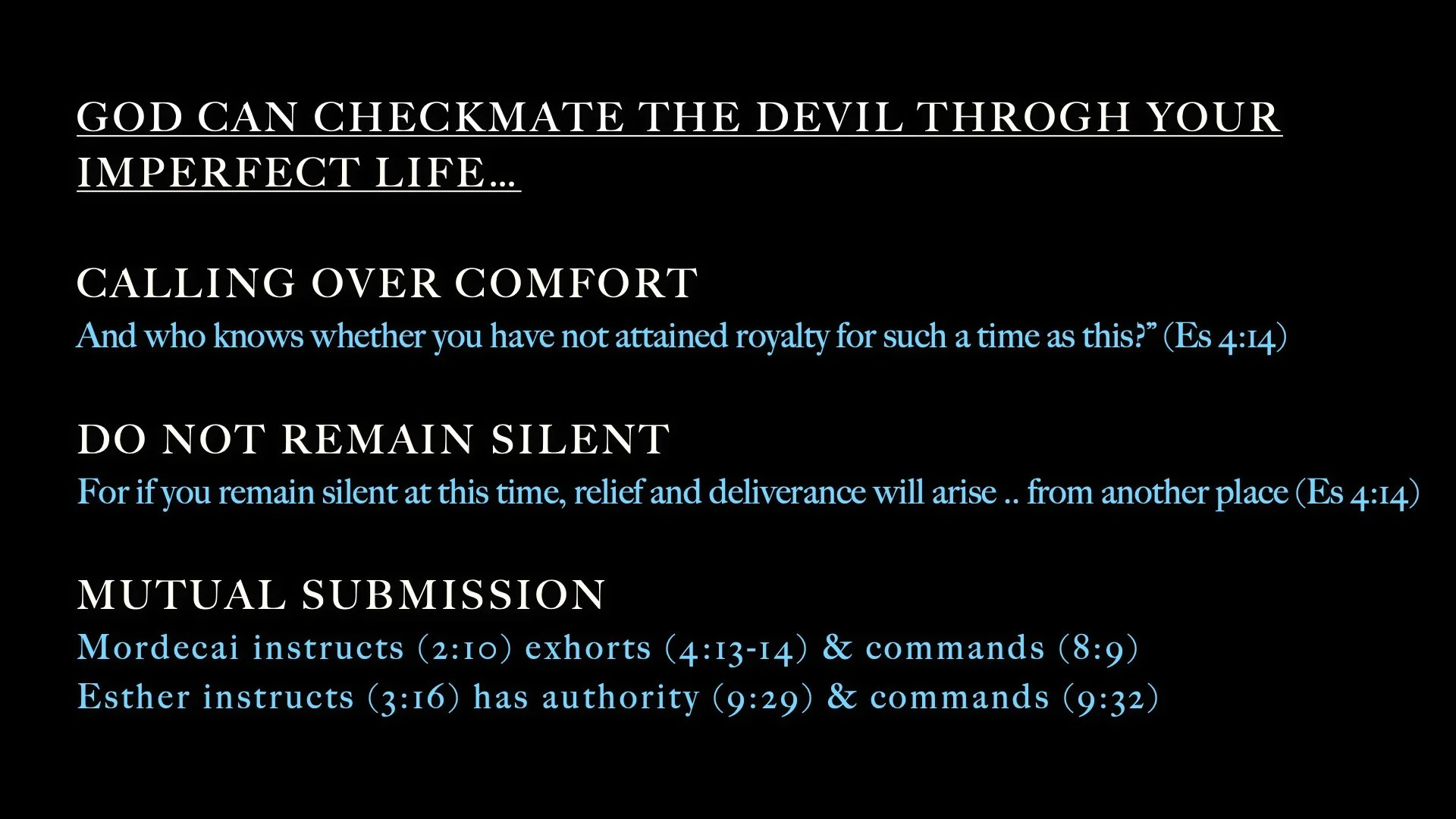
Mordecai urges Esther to act: “Who knows whether you have not attained royalty for such a time as this”
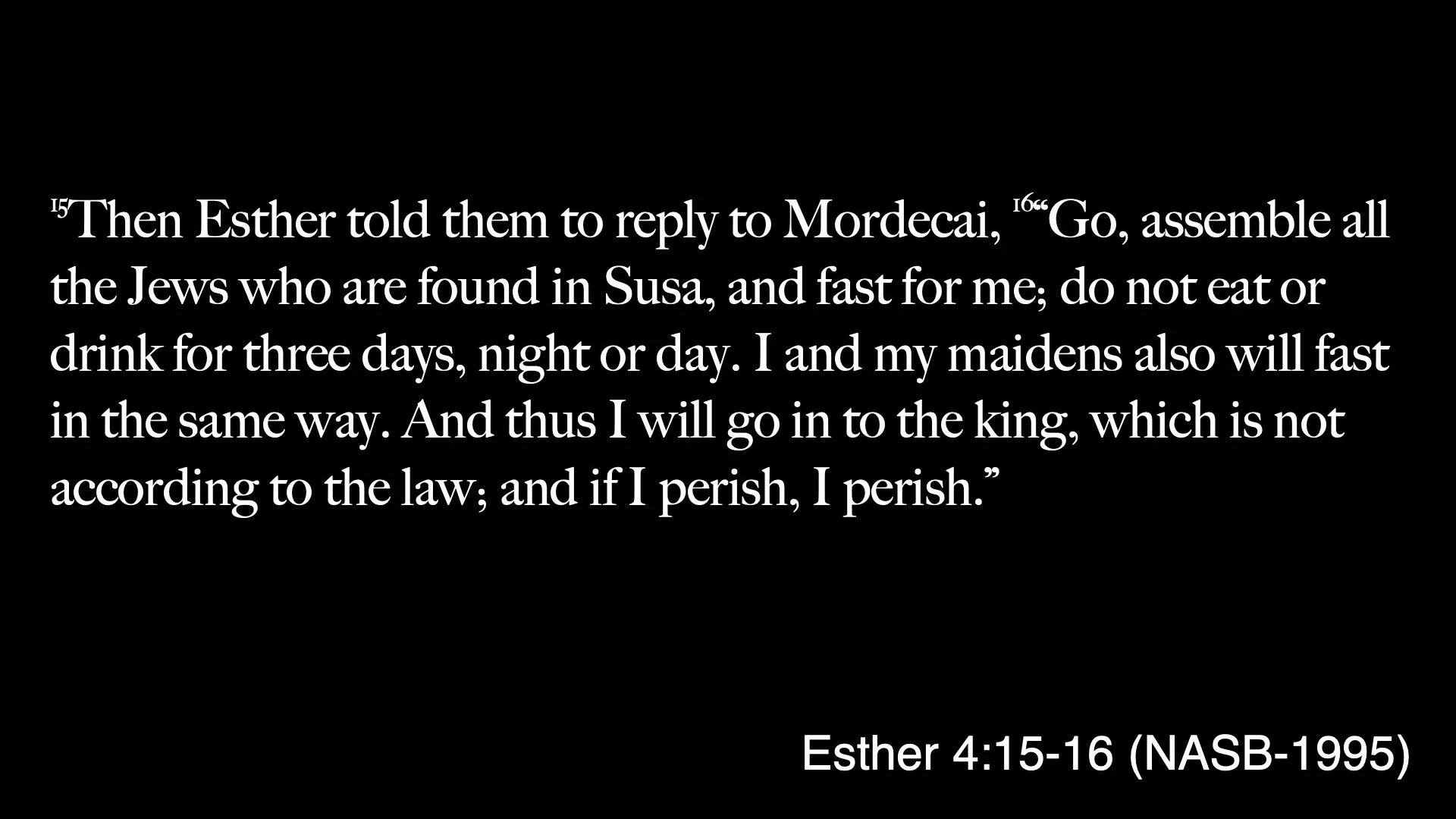
Esther calls a three-day fast, then enters the king uninvited, risking execution
King raises his scepter; she is spared
Esther hosts two banquets before making her request, possibly stalling out of fear
At the second banquet she names Haman as the enemy; king condemns him
Haman is impaled on the 75-foot pole he built for Mordecai
Mordecai and Esther are given authority to issue a counter-decree: Jews may arm and defend themselves
On the appointed day they repel attackers without harming women, children, or taking plunder
Feast of Purim established, still celebrated today
Theological Takeaways
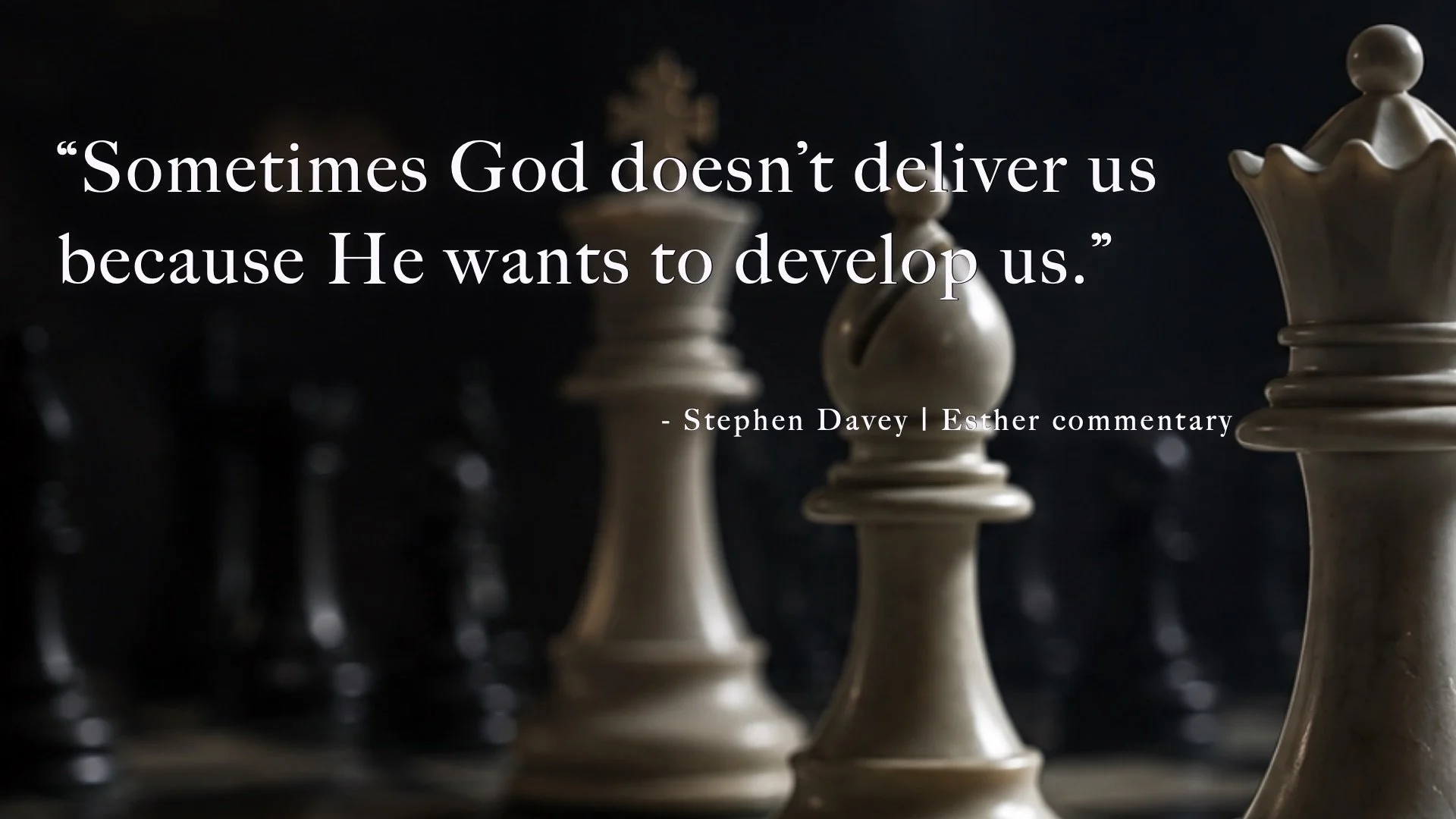
God’s sovereignty operates even when he is unnamed: “God doesn’t have to be visible to be playing chess in a very good way in your life”
He works through imperfect, willing people, not perfect ones
Mordecai starts politically motivated; finds identity in Yahweh and refuses to bow
Esther starts passive and hidden; finds her calling under pressure
Three closing applications:
Calling over comfort: choose your calling even when it is deeply uncomfortable
Don’t remain silent: faith must be vocal (Romans 10:17)
Mutual submission: the pathway to God-given authority always runs through submission first
Bridge to Women in Leadership Series
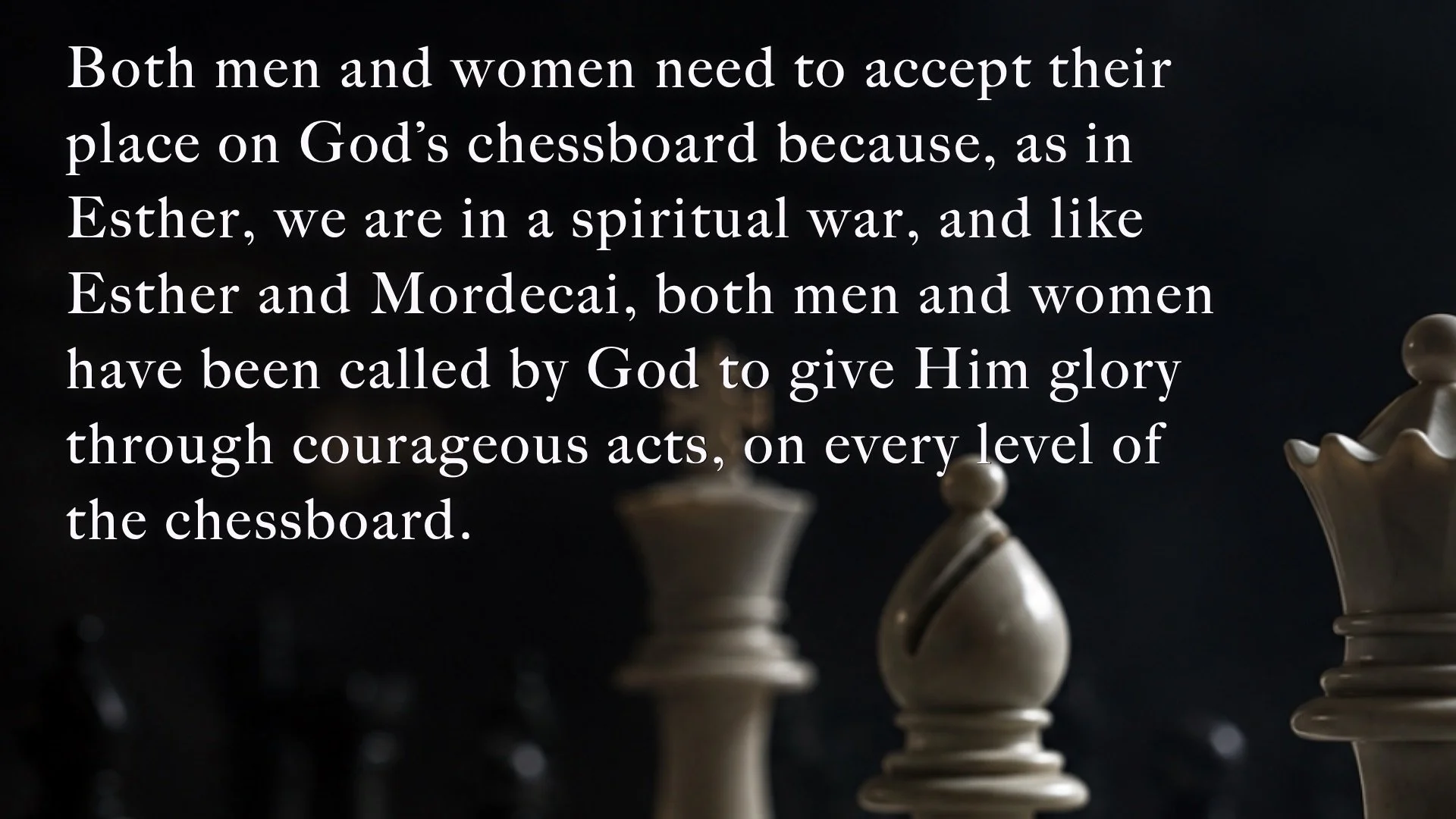
The series is not a feminist movement; it is about removing theological obstacles that block women from walking in their calling
“Imagine trying to win a game of chess with half your pieces off the board and no queen”
Esther’s arc models the pattern: submission under Mordecai and male leadership, then a God-appointed hinge into authority
She ultimately commands the establishment of Purim; Mordecai instructs, Esther commands
Mutual submission is the goal: men and women acting in their God-given design while complementing and submitting to each other
Four more weeks of teaching ahead on the pastoral wisdom of how to implement this
Homework: read 1 Corinthians before next week