Series Context and Heart Behind It
8-year journey for Ken, intensified over the last 1-2 years, then again in the last 1-2 months
Vision: raise up a “last days army” of men and women walking freely in their God-given destiny
Series goal: remove obstacles, not create division; open dialogue on what Scripture actually says
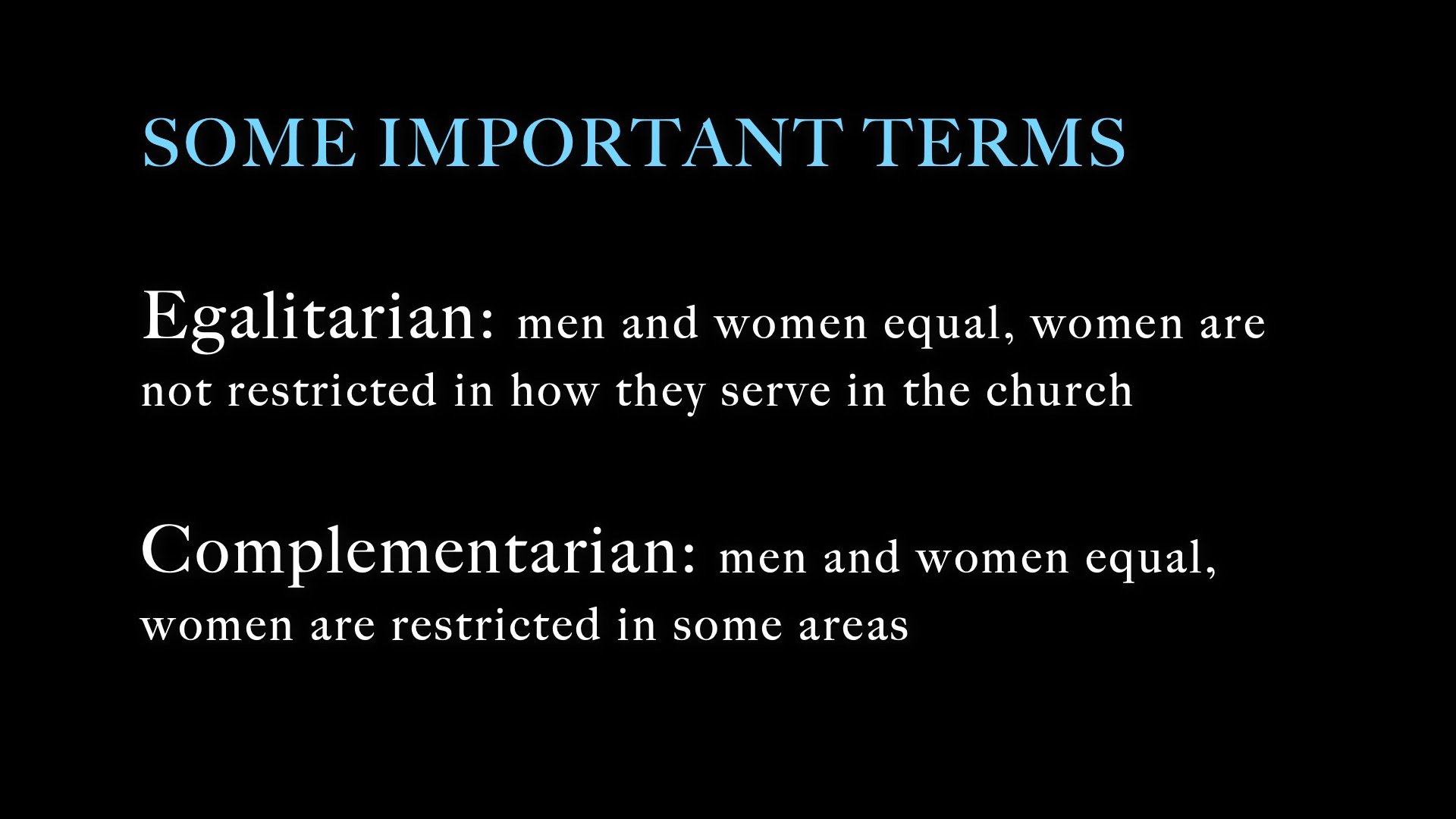
Egalitarian position (Ken’s): men and women equal, no restrictions on how they serve
Complementarian position (for context): men and women equal in value, women restricted in some leadership areas
Tribe’s history: women have always been on leadership and voting/governing teams; now moving toward eldership
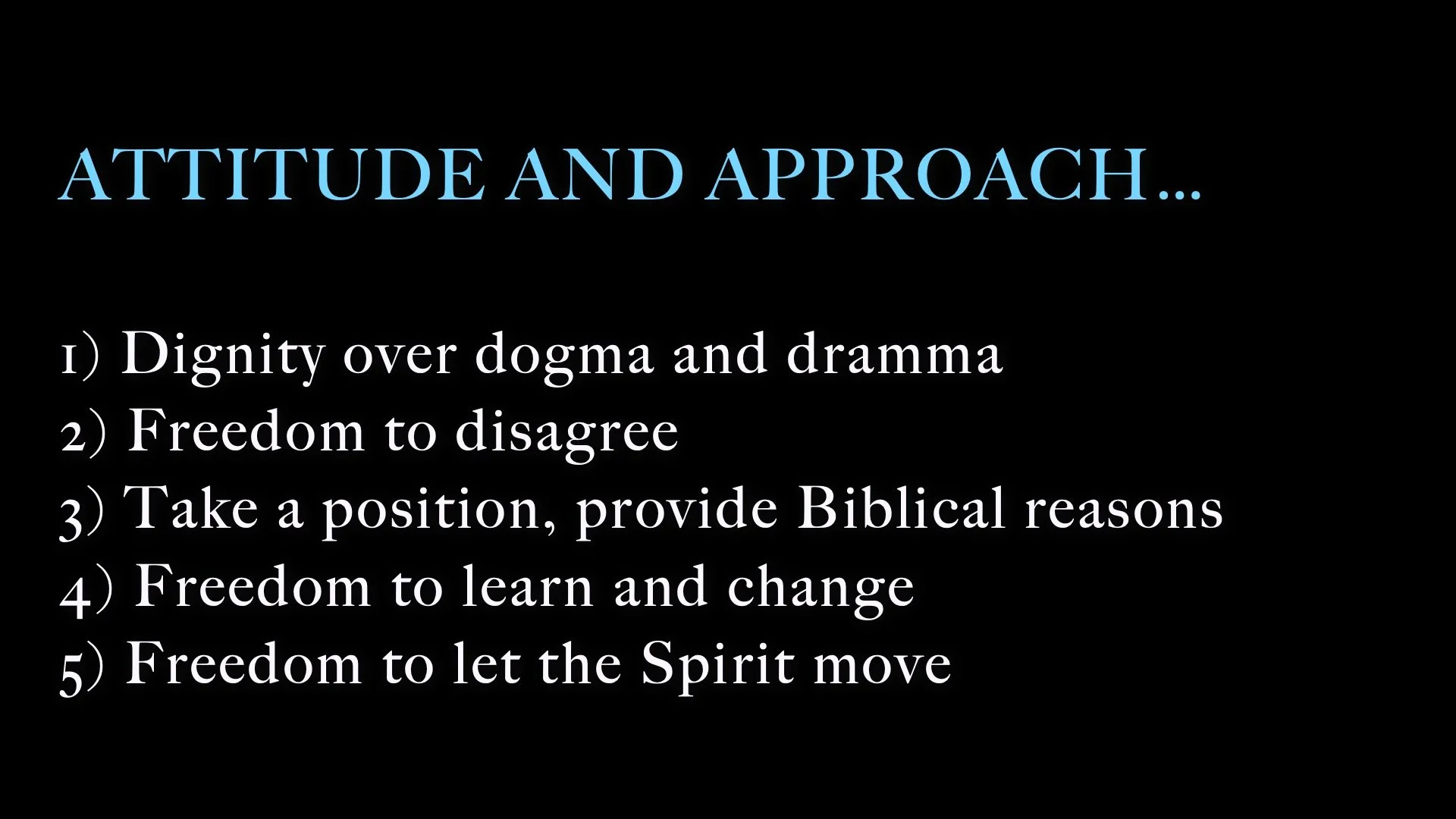
Ground rules: dignity over dogma, freedom to disagree with biblical reasoning, freedom to learn and change
1 Corinthians 14:34-35 (Women Silent in Church)
Question from last week: what is the passage actually saying, not just what it isn’t saying
Key insight: Paul quotes 6-8 “Corinthian slogans” throughout 1 Corinthians, plus 15 OT quotes and a Greek poet
Not everything in 1 Corinthians is Paul’s own voice; he’s often quoting others to correct them
Verses 34-35 identified as a quote from legalistic, Judaistic intruders, not Paul’s own position
The verses are internally incoherent: “the law” never commands women to be silent
They contradict Paul’s broader teaching and the rest of Scripture
Verse 36 begins with a Greek word (untranslatable without “!” and “?”) meaning “What?! No way!”
Paul’s response is the opposite of silencing women
Paul’s broader task in 1 Corinthians: keep the church out of two ditches
One ditch: “anything goes” (Corinthian permissiveness)
Other ditch: legalistic, Judaistic rule-imposition
Genesis 2:18 and the Hebrew Word “Ezer”
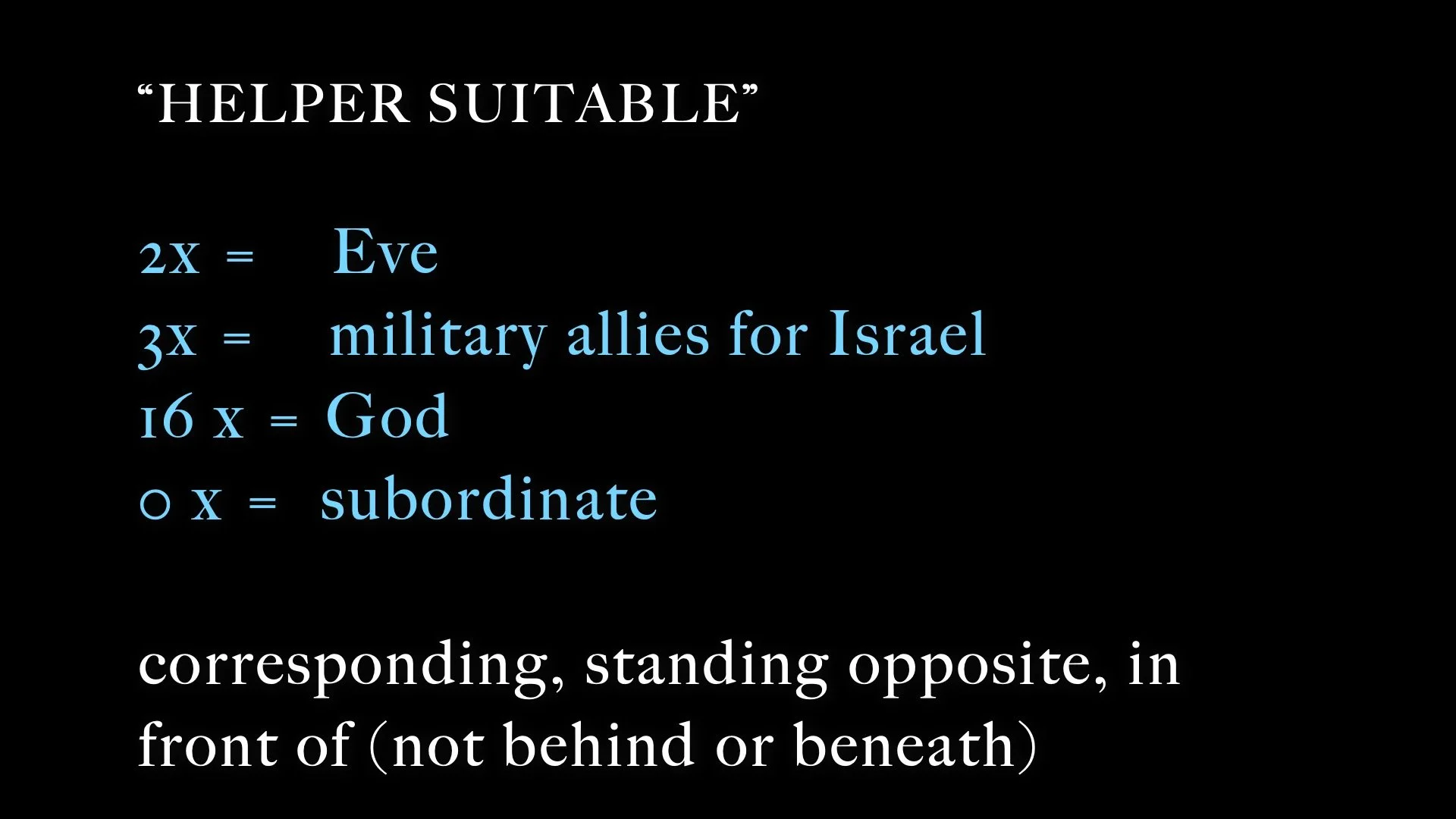
“Helper suitable” (ezer kenegdo) widely misread as “assistant” or subordinate
Hebrew word ezer used:
Twice for Eve
3 times for military allies rescuing Israel
16 times for God
0 times for a subordinate
Ezer means a powerful ally called when you cannot do it alone, not a lesser helper
“Kenegdo” (suitable/across from him): implies opposition in the best sense, collaborative pushback
Rabbi clip: marriage created to solve “acting alone,” not loneliness; two minds produce better outcomes together
Complementarian argument (Adam came first) addressed:
Animals came before Adam; chronological order doesn’t confer authority
Eve was made from human material; Adam from dirt
Point: these arguments don’t hold up under scrutiny
Conclusion from Genesis: men and women made as equal, opposite, mutually dependent collaborators
1 Corinthians 11: Headship and Head Coverings
“Head” in verse 3: Christ is head of man, man is head of woman, God is head of Christ
Key fork: “head” means authority OR source (as in head of a river); discussion hinges on this
Head coverings in Corinthian culture: covering = shame or slavery; uncovering for women = prostitution, adultery, or slave status
Paul’s point: don’t send the wrong social signal when you come to worship
Contemporary parallel: like covering your head with a Gatorade towel after a devastating loss
Verse 7: man is image and glory of God (worship as a free person, not a slave); woman is the glory of man
“Glory of man” not derogatory: woman is the most beautiful thing God made, a glory to be used for God’s glory
Verse 10: “a symbol of authority on her head” contains added translator words (“a symbol of”)
Original Greek says the woman has authority on her own head, i.e., she decides whether to cover
Verses 11-12: mutual interdependence tied together; neither man nor woman is independent of the other
Verse 13: Paul tells the whole church to “judge for yourselves,” not just the men
Verse 16: if anyone wants to argue, the common practice across all churches is honoring one another; that’s where Paul ends
Overall: passage is about honor in worship, not hierarchy of leadership
Closing Summary and Next Week
Central image: two boards leaning at 45 degrees, meeting at the center
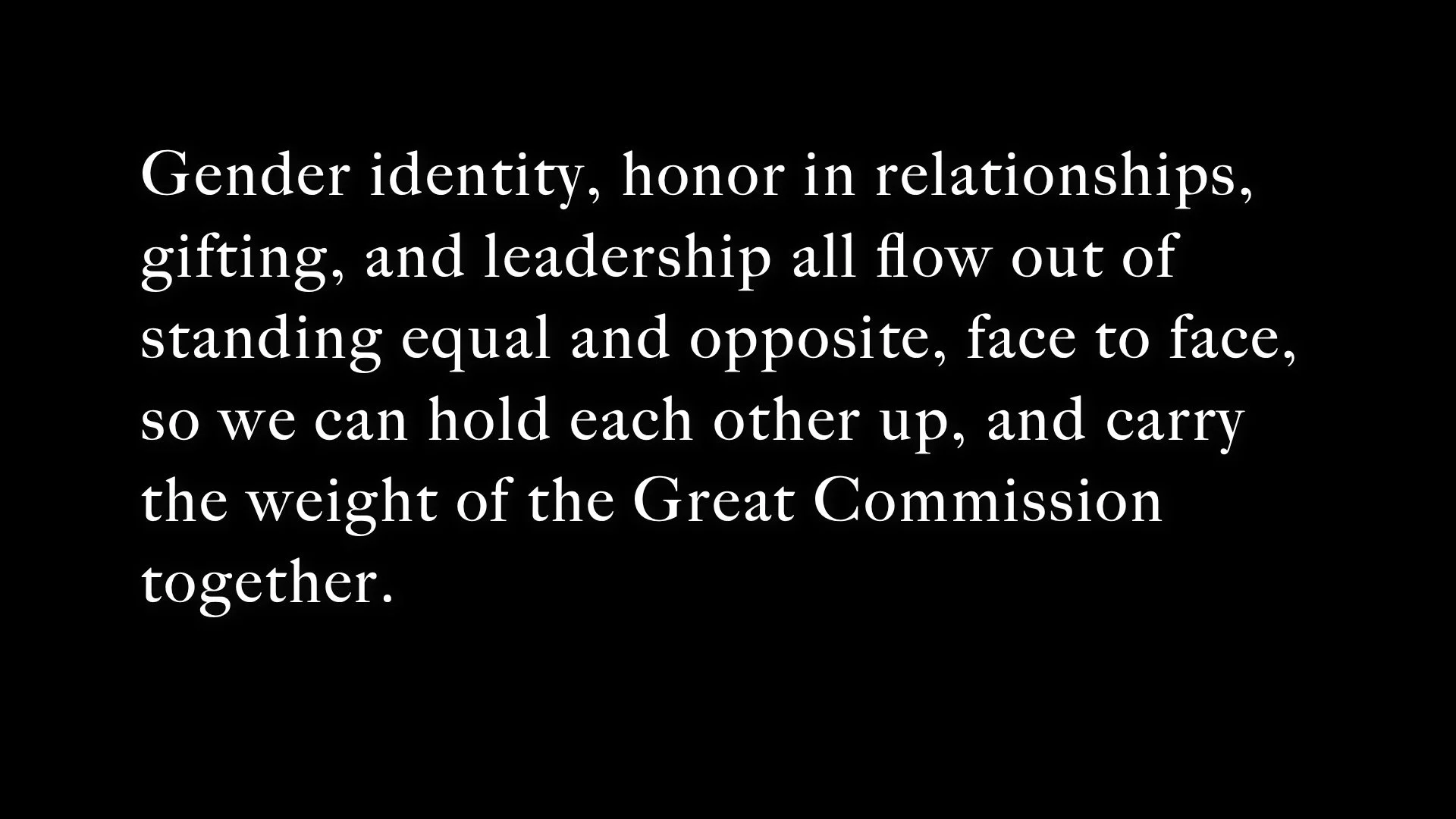
Neither can stand alone; neither should overpower the other; together they make a complete structure
Gender identity, honor, gifting, and leadership all flow from this equal-and-opposite partnership
Sexuality note: all of sexuality safely contained within marriage between one man and one woman; Bible teaches against sexual immorality in every other form
Single people honored: Paul calls singleness superior, an undistracted partnership with God
Next week: 1 Timothy 2:12, the “biggest doozy” of the series
Homework: read 1 Timothy carefully, look at the original Greek verbs in 2:12 beyond the English translation
Prayer requests: Kathy’s family (loss of daughter, funeral tomorrow), Stacy Human’s family (loss of father)
Questions/disagreements welcome at hello@tribeomaha.com; Ken’s wife will grill him with submitted questions at the end of the series