Women In Leadership (Part IV)
Series Context and Approach
Final teaching week of the Women in Leadership series; next week is Q&A with Erin
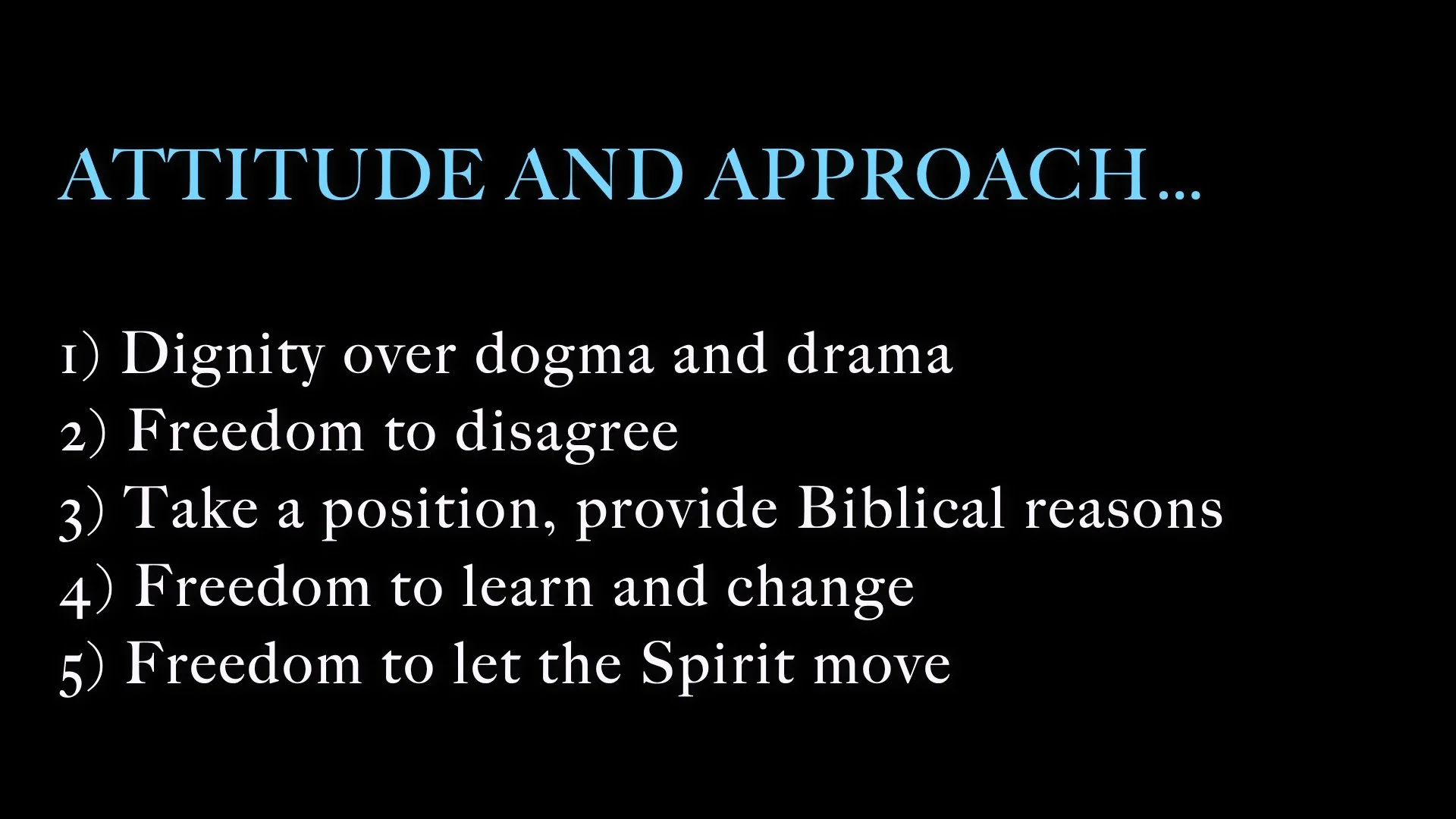
Tone set from the start: dignity, freedom to disagree, freedom to change one’s mind
Preacher (Ken) frames himself as beginning 10 years into deeper studies, openly uncertain on some conclusions
Goal: remove barriers for women to walk in their God-given destiny, not just tolerate but celebrate it
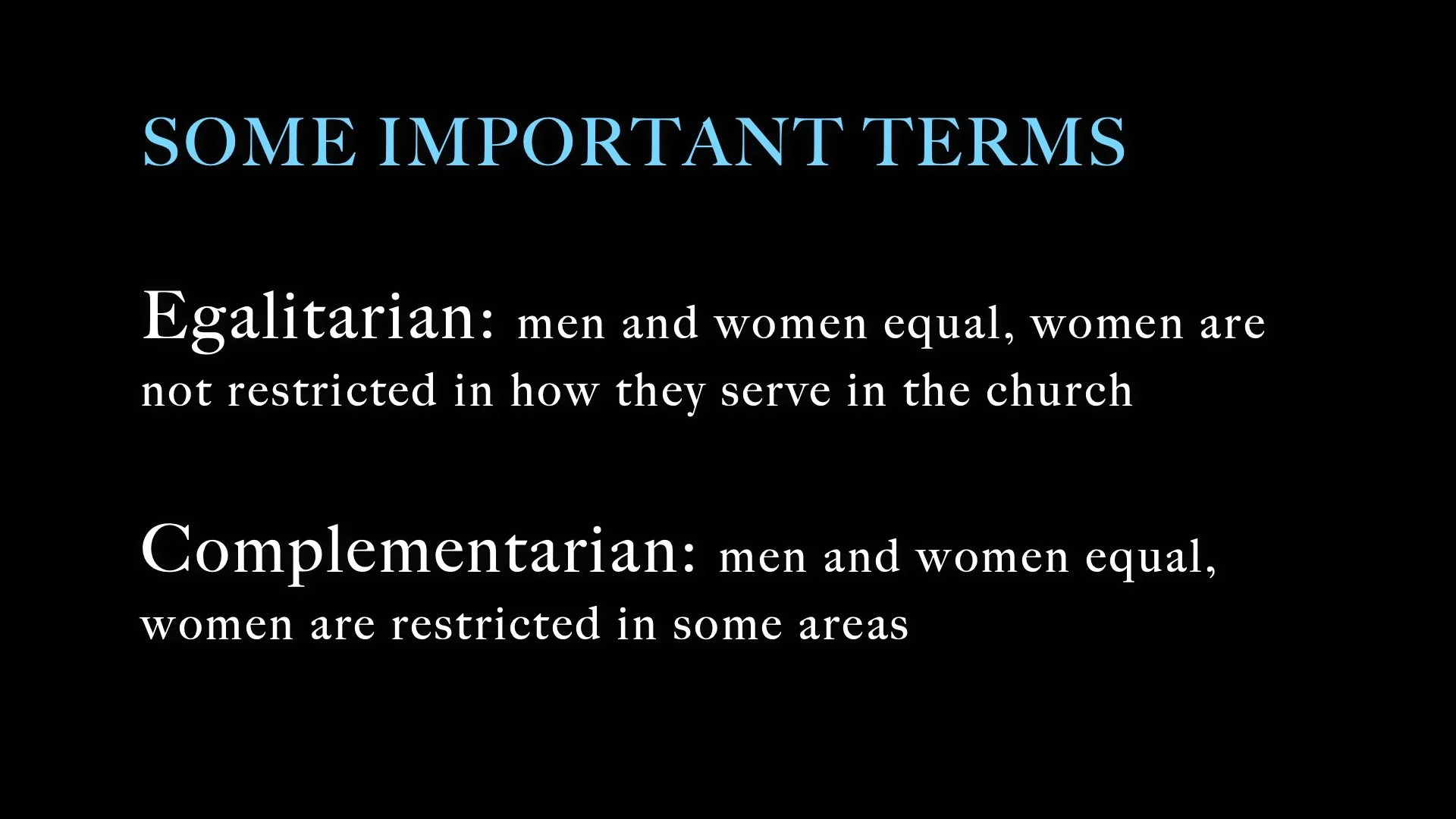
Tribe currently structured complementarian; this series is pushing toward a more egalitarian reading
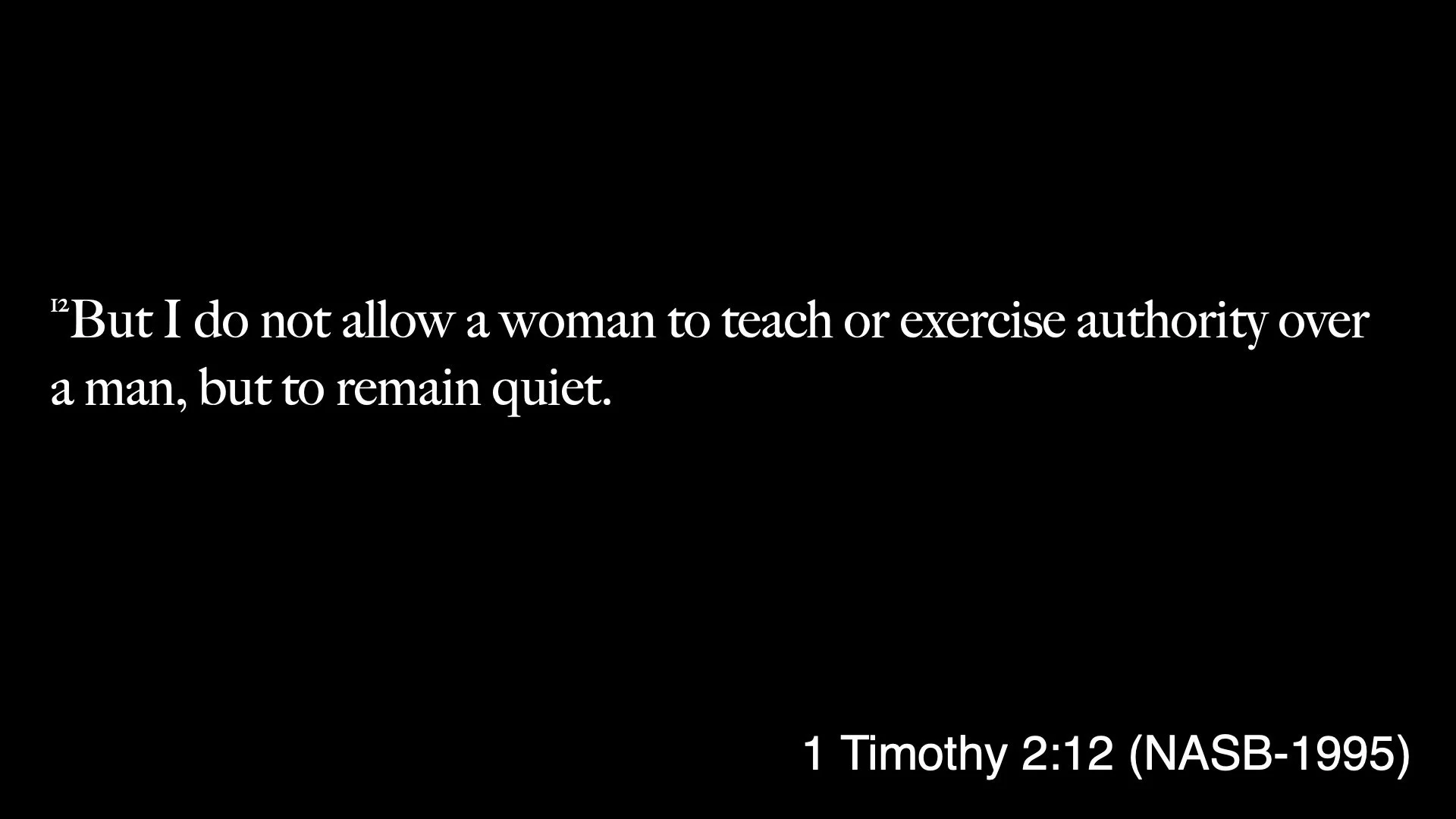
Exegesis of 1 Timothy 2:8–15
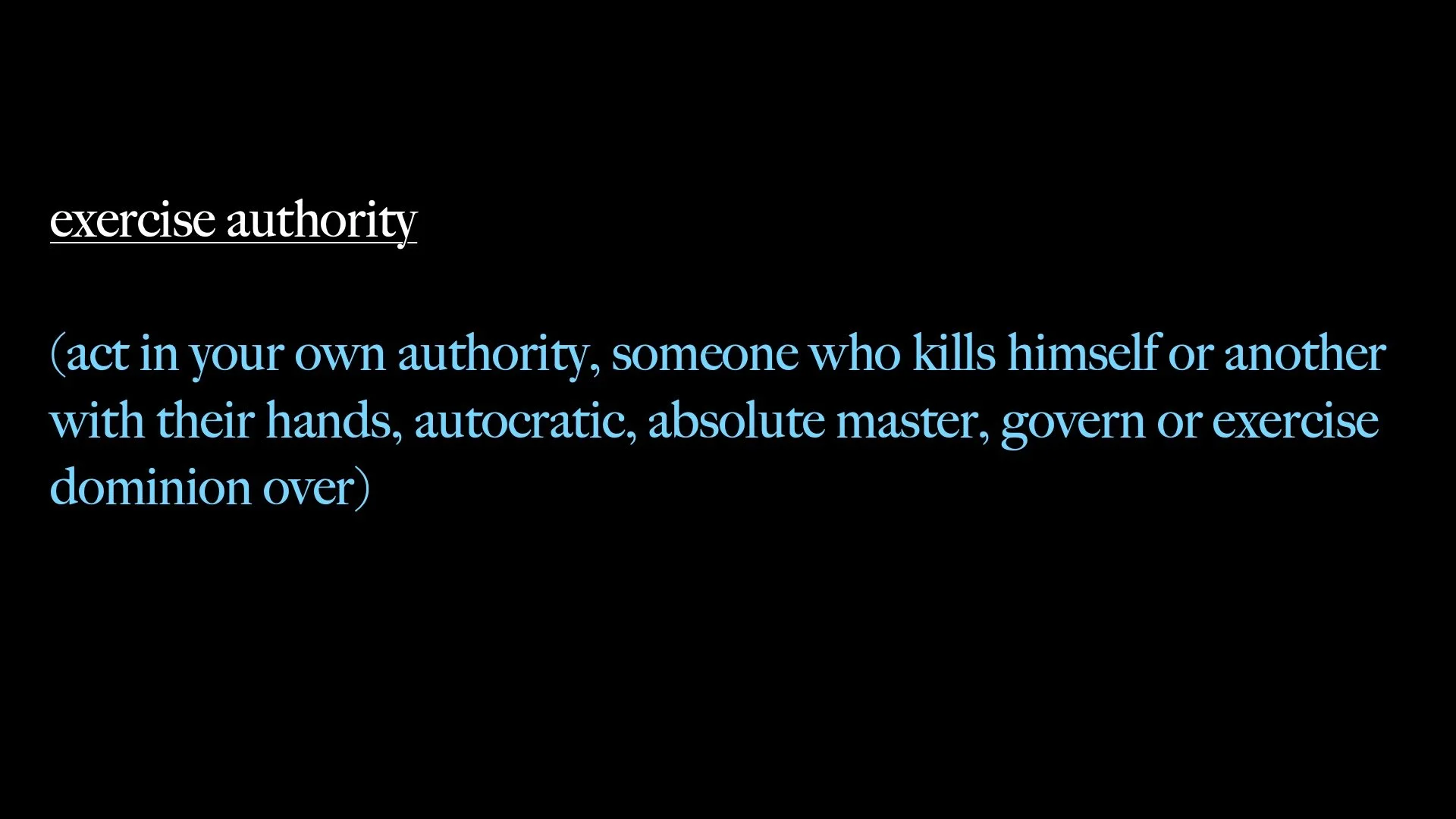
Key verb in v.12 (“exercise authority”) is authentein, a hapax legomenon (only occurrence in the Bible)
Meanings include: act in one’s own authority, autocratic master, one who kills with their own hands
The extreme range of meaning signals something deeper than a simple gender prohibition
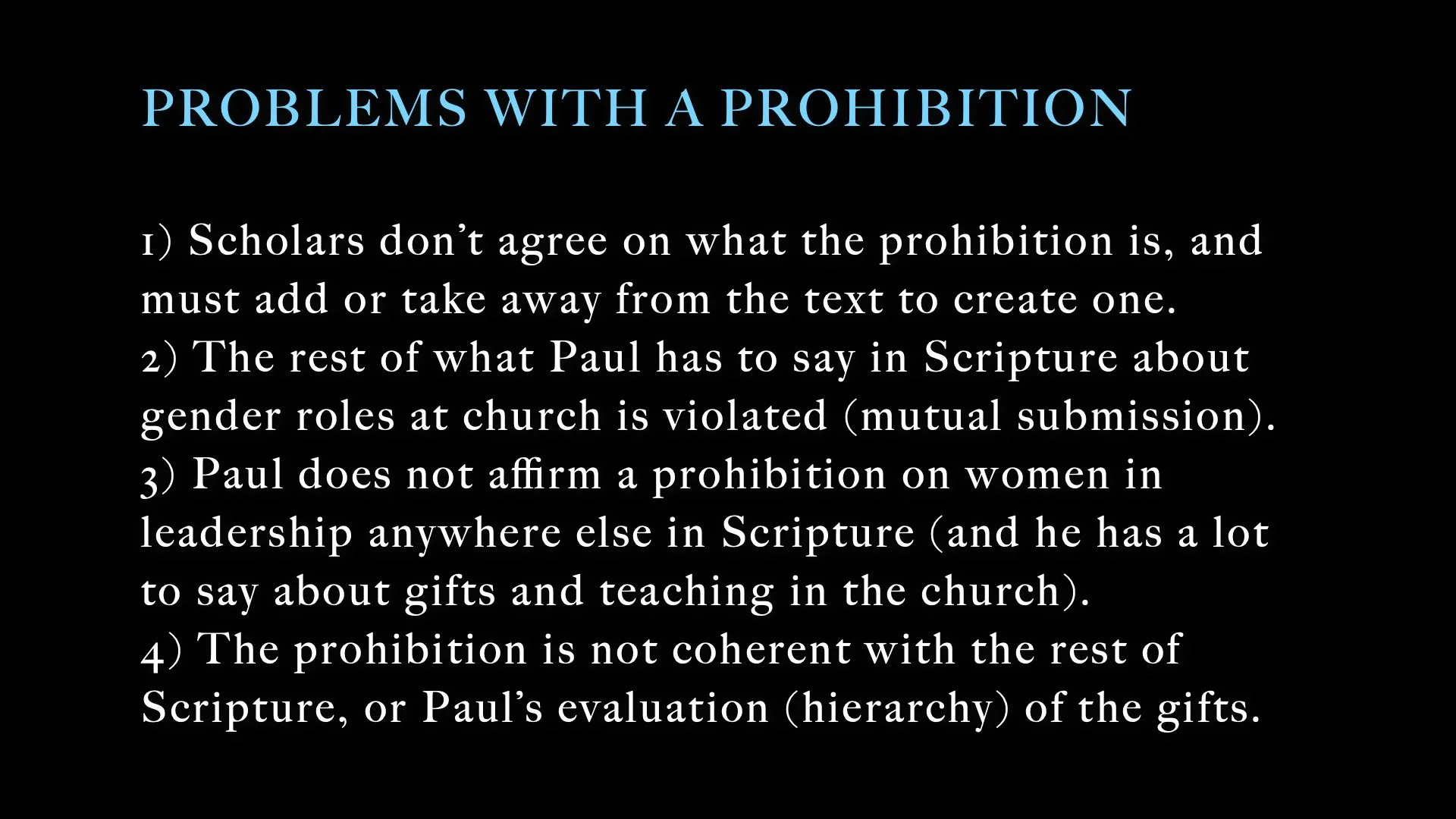
Problems with extracting a universal prohibition from this passage:
Scholars who hold a prohibition can’t agree on what women actually can’t do
The rest of Paul’s writing on gender shows mutual submission (1 Cor, Eph); no gender distinction in gift passages
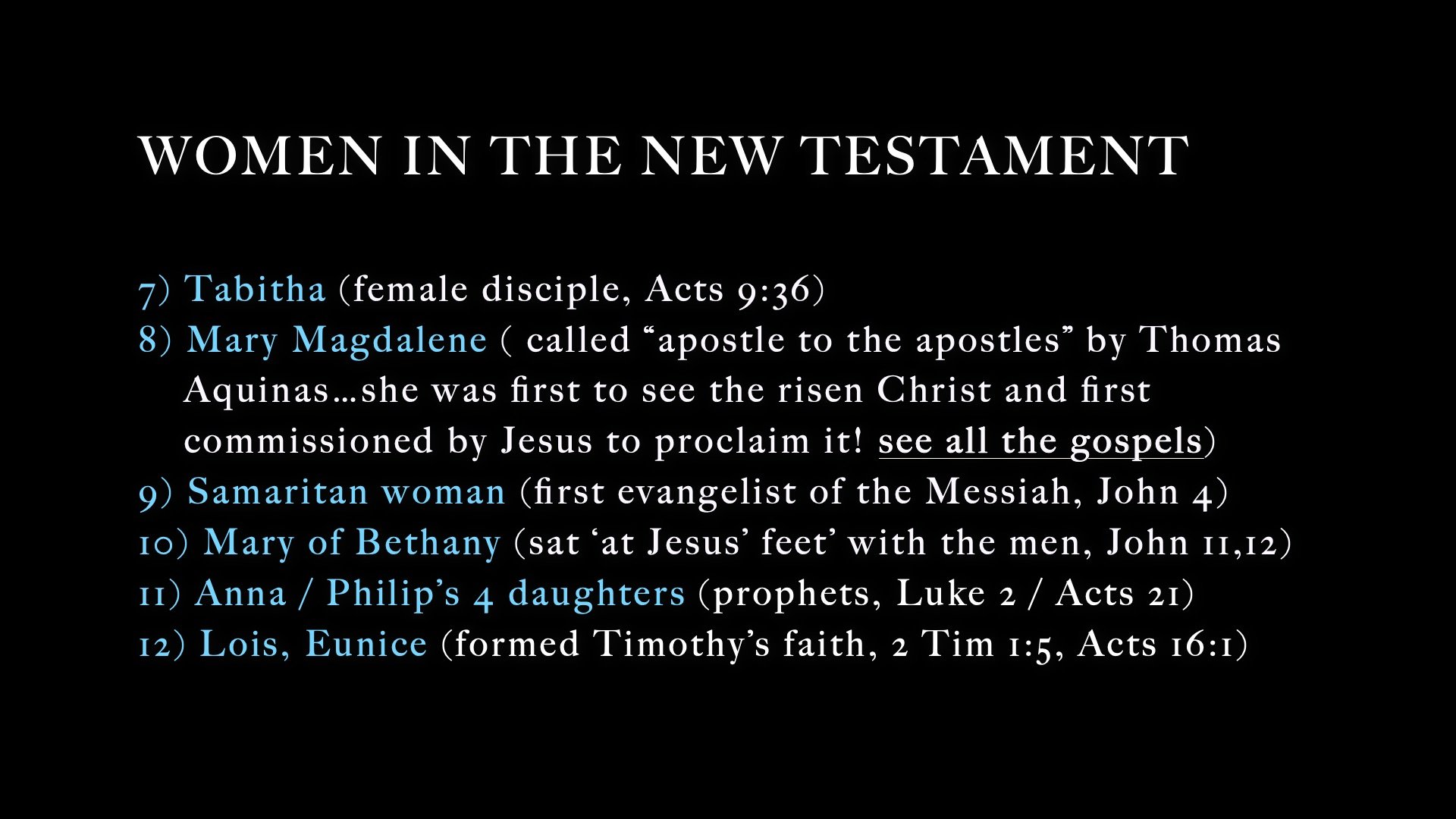
Paul affirms female prophets and apostles elsewhere, yet prophecy outranks teaching
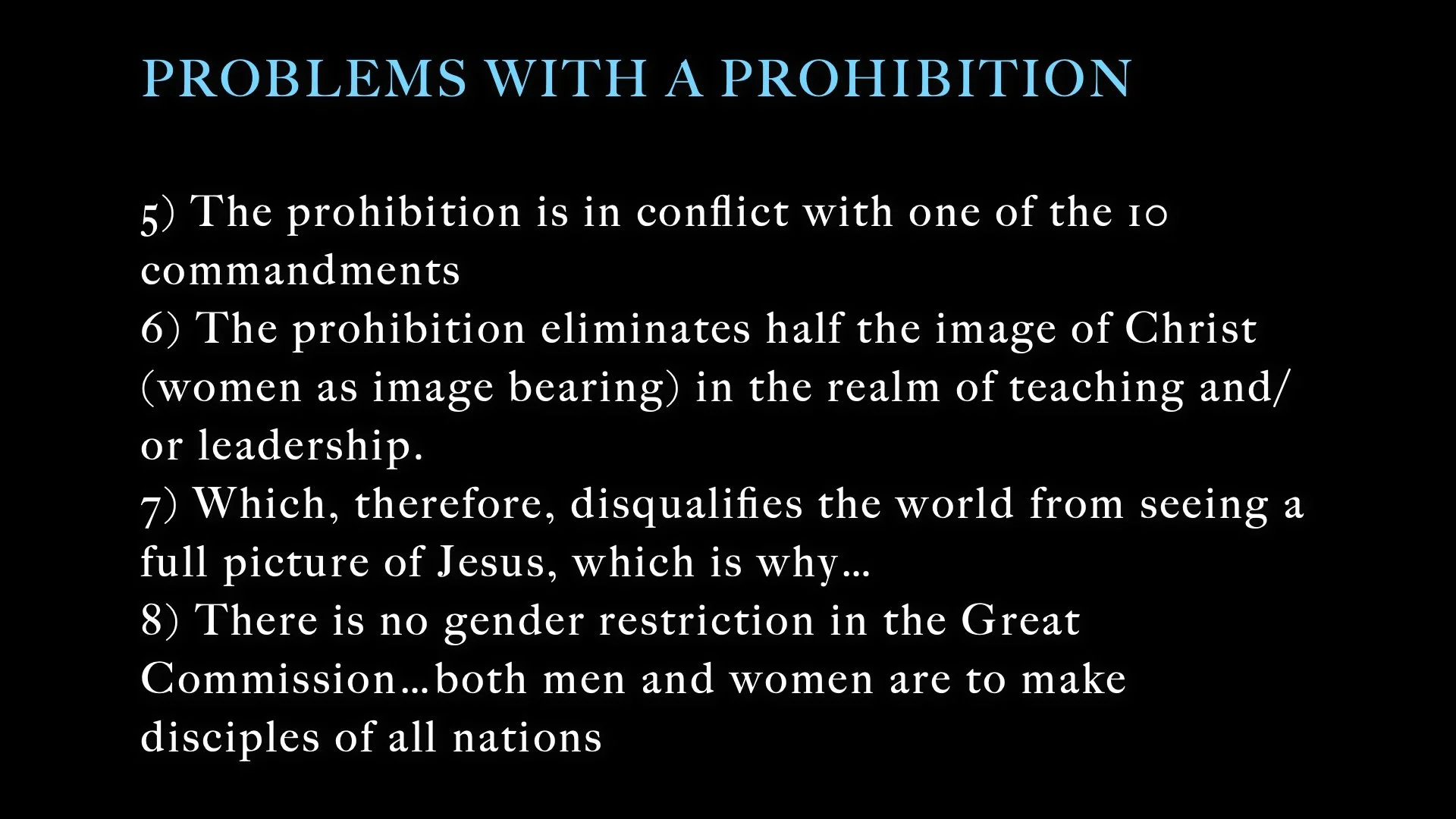
A blanket prohibition conflicts with the 5th Commandment (honor your mother)
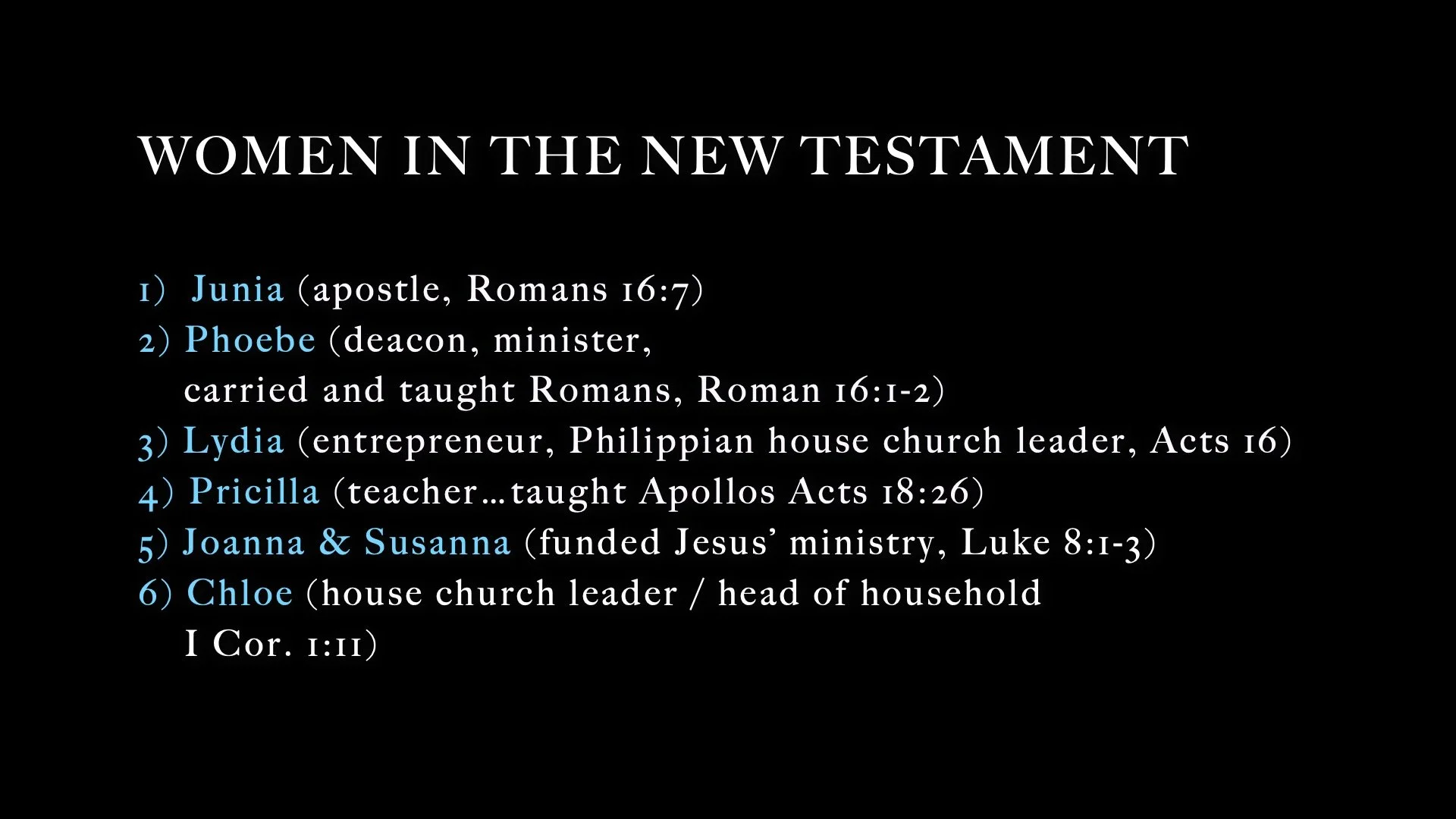
The Great Commission was never gender-specific
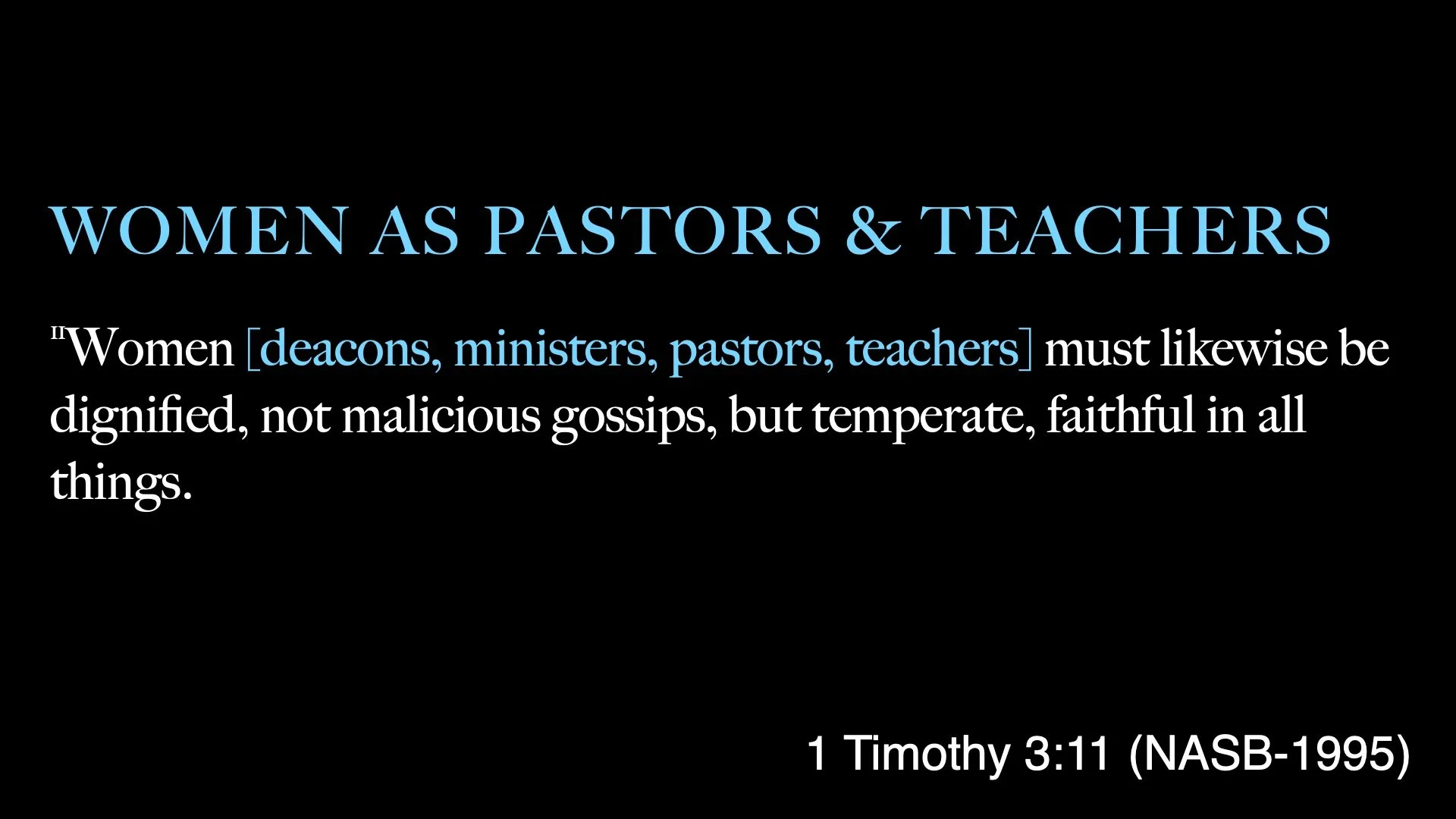
1 Timothy 3:11 describes female deacons (ministers) just one chapter later
Preferred reading: the passage is situational, addressed to Ephesus
Women were newly permitted to learn Torah and the gospel in a formal church setting
v.11: “let a woman quietly receive instruction” = protect women’s right to learn undisturbed
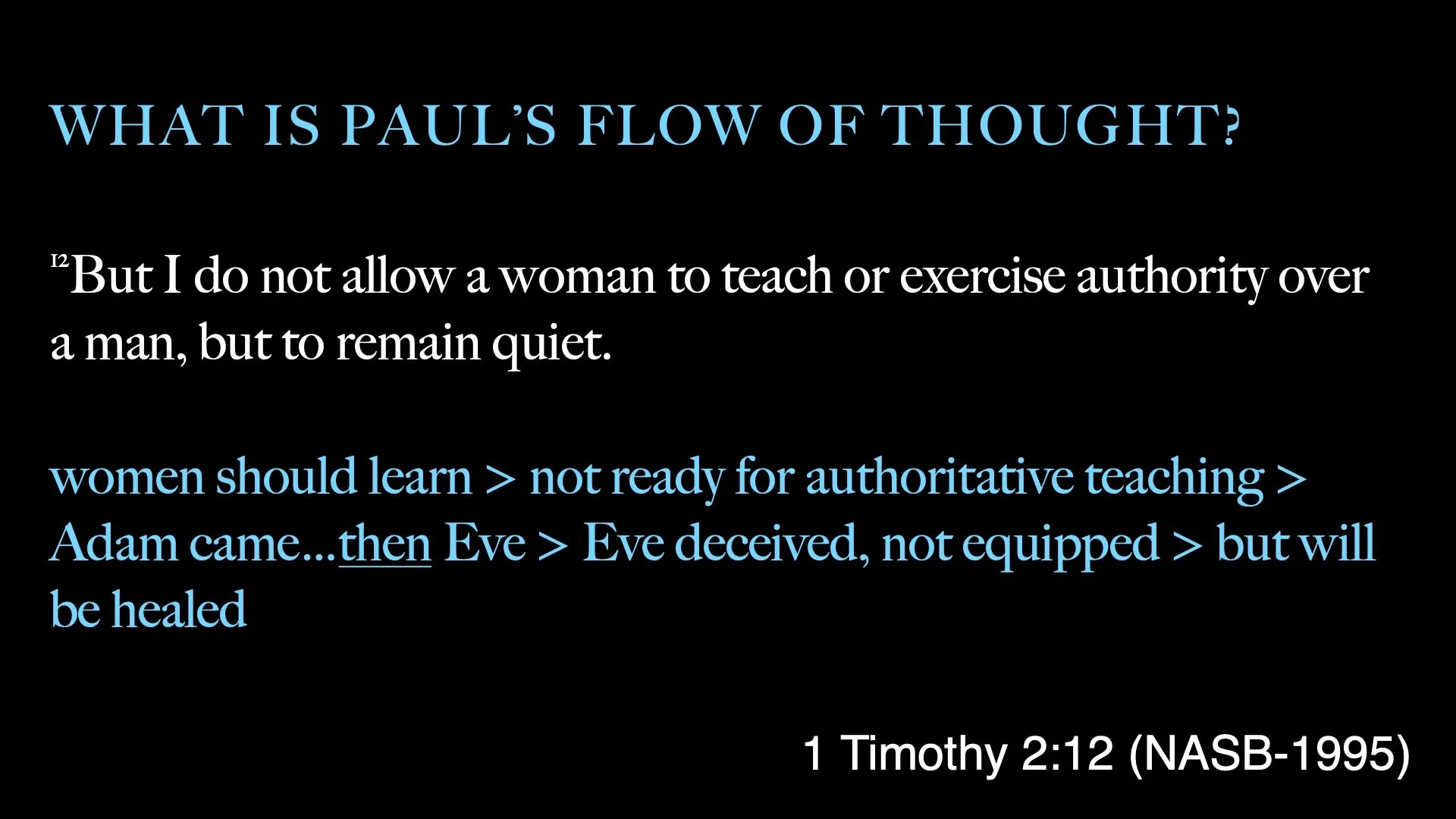
v.12: don’t let new learners take over teaching before they are equipped, not a permanent gender ban
Eve’s deception parallels the Ephesian women: a rookie mistake from lack of prior instruction, not innate inferiority
v.15 (“preserved through bearing children”): not a salvation formula; points to women ultimately bearing the Messiah who redeems creation
Laura (attendee) reinforced the situational reading: a teacher disciplines each class differently; applying Ephesus universally is like giving chemotherapy to a patient without cancer
Elders: 1 Timothy 3
Greek of 3:1 uses anyone (not “man”) as the subject; translated as “man” to harmonize with the husband/wife language
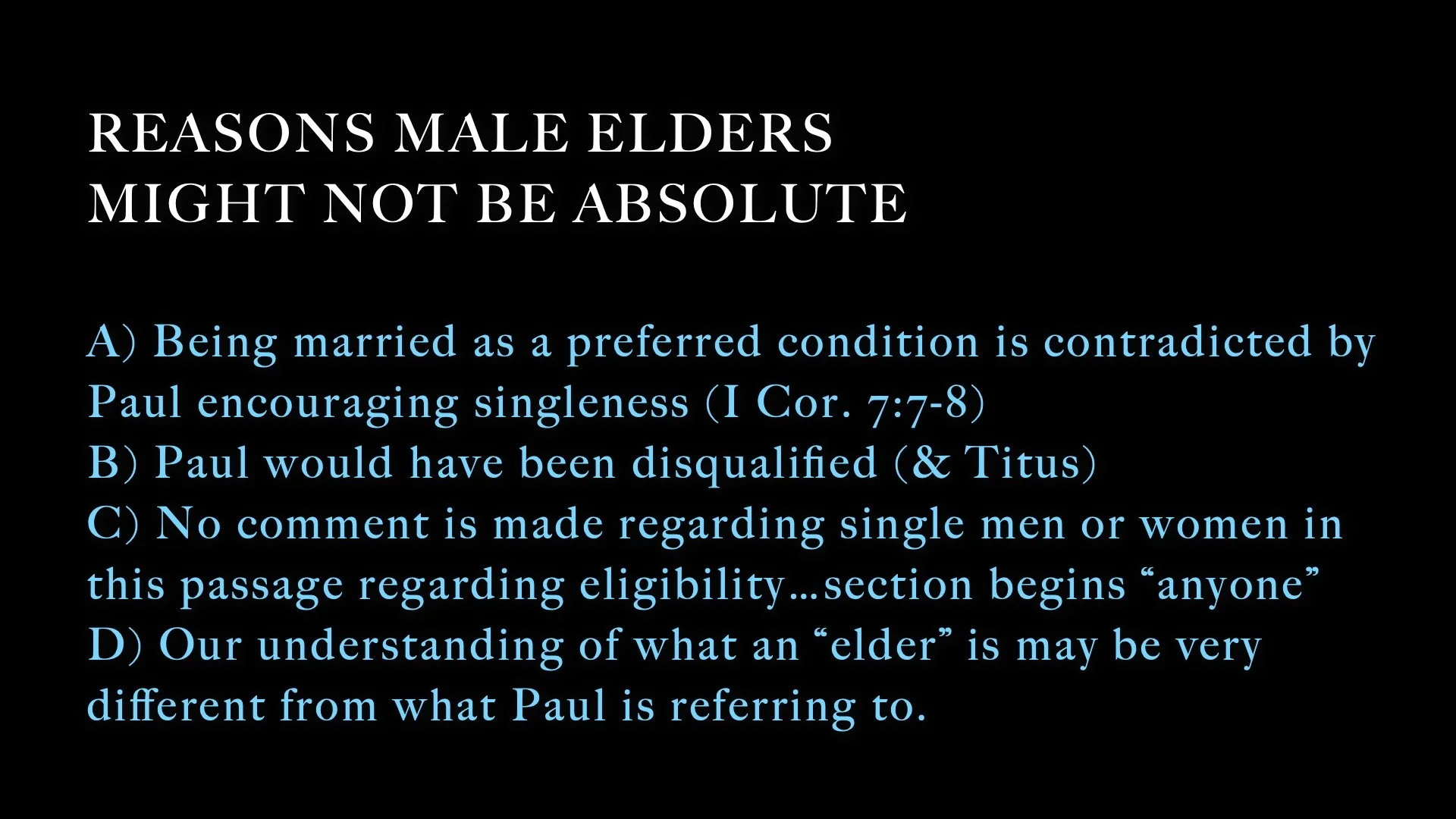
“Husband of one wife” most likely means: don’t be a polygamist or a womanizer, not a strict married-male requirement
Paul was single and would have disqualified himself and Titus under a literal reading
No comment is made on single men or on women
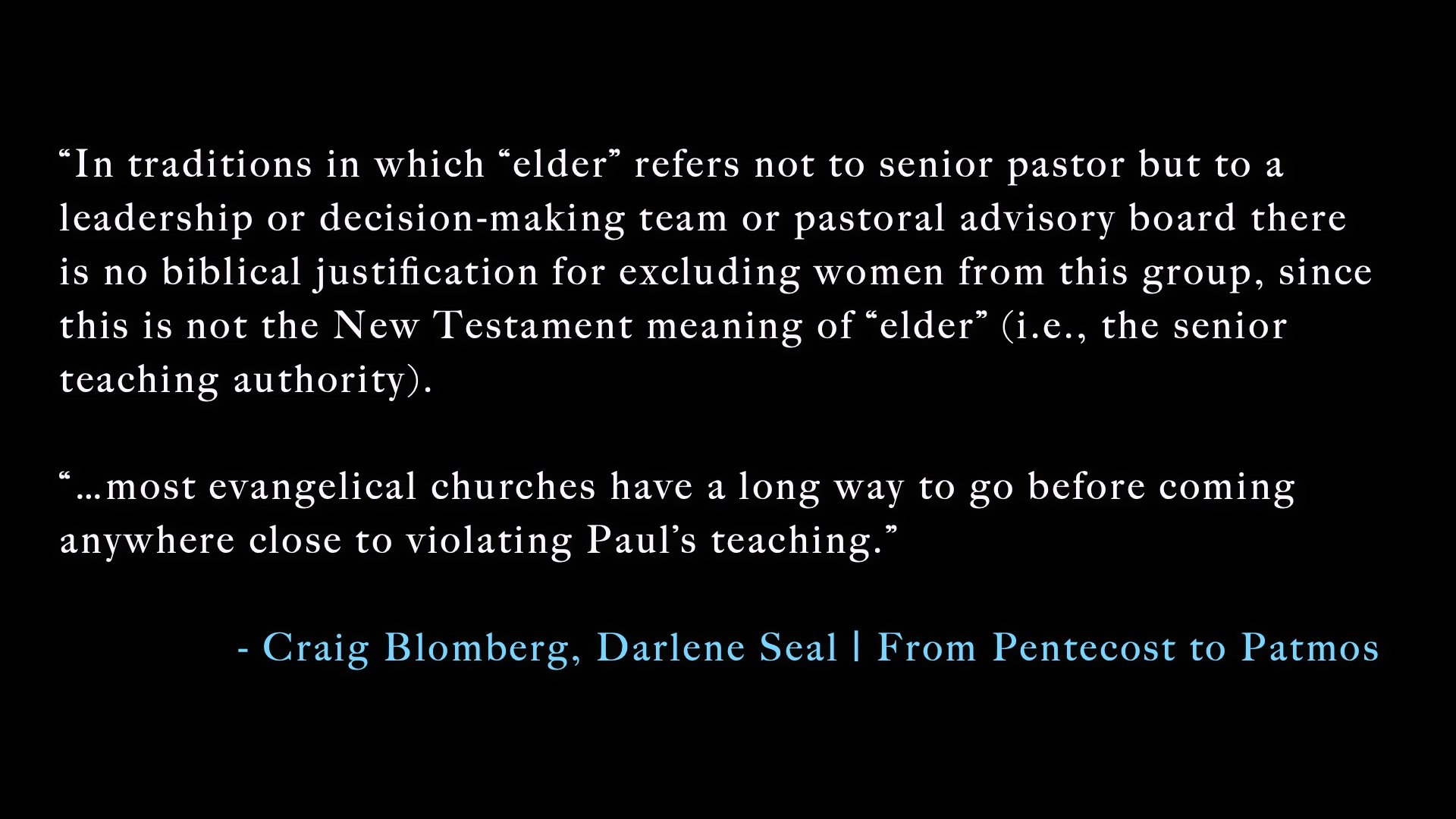
Cited From Pentecost to Patmos (neither egalitarian nor complementarian): if “elder” means a leadership/decision-making team rather than senior teaching authority, there is no biblical justification for excluding women
Conclusion on elders:
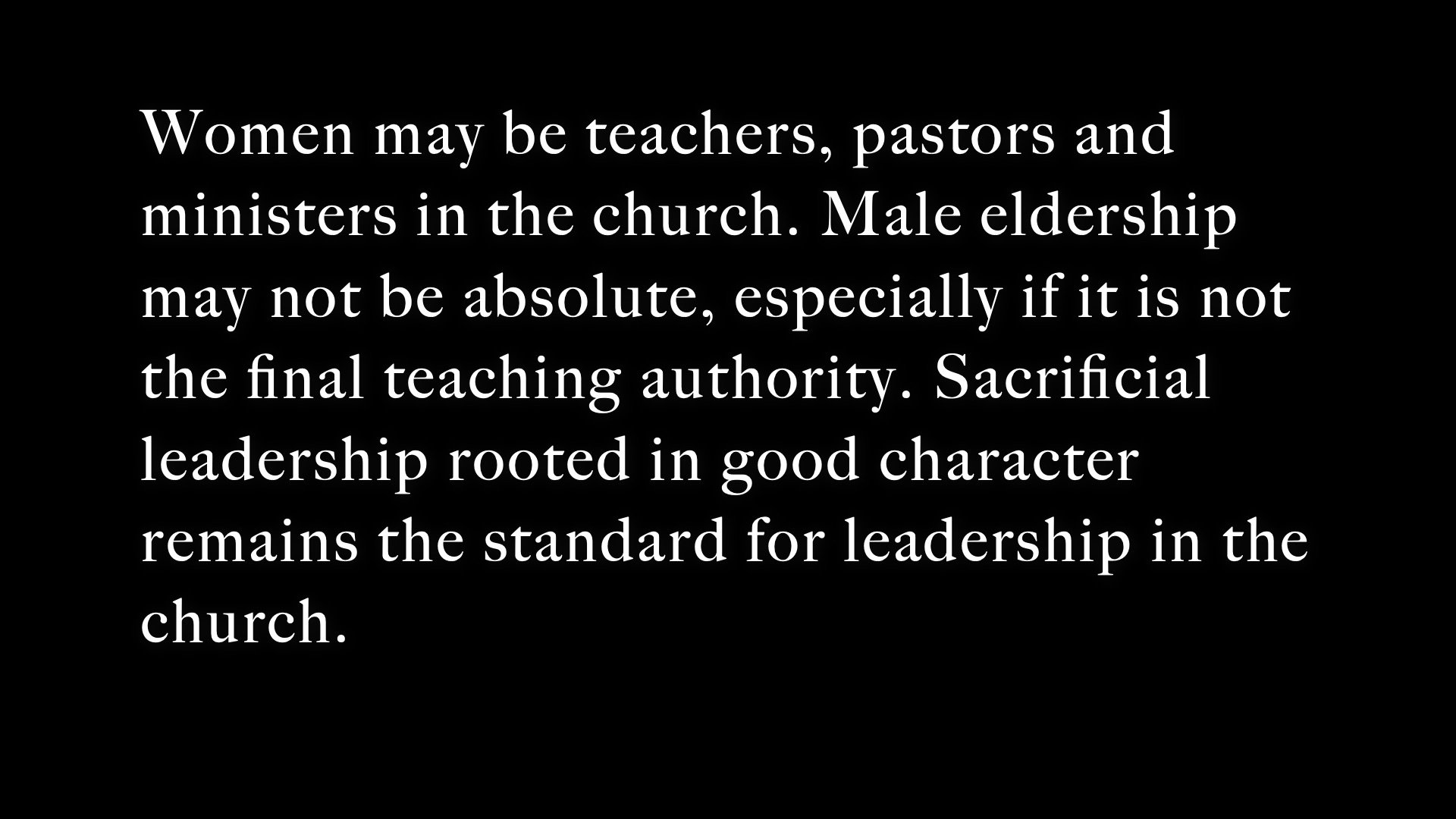
The restriction, if any, applies to the superintendent role (final doctrinal authority), not to leadership teams broadly
Tribe will launch with male elders as a starting point, mirroring the family structure in Ephesians
Ken is not entirely certain male-only eldership is required, but it fits where Tribe is now
Tribe’s Practical Position
Women are not only allowed but encouraged and should be trained for:
Preaching
Leadership teams and decision-making
Worship teams
Discipleship groups
Bible study teaching
Male senior leader retained as the superintendent/final teaching authority, at least for now
Texts are “less rigid than you might think”; most churches are far from violating Paul’s actual teaching
Closing exhortation: study like a scholar, but only after spending time with God and inviting the Holy Spirit in first
Next Steps
Submit questions for next week's Q&A with Erin - Email questions to hello@tribeomaha.com ahead of the session, which will wrap up the Women in Leadership series.